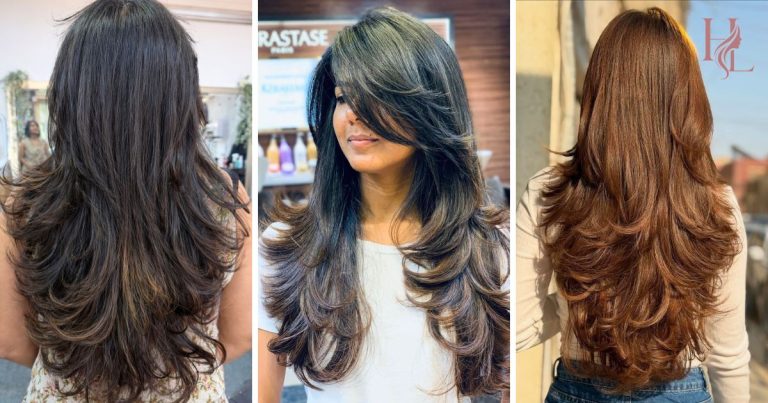
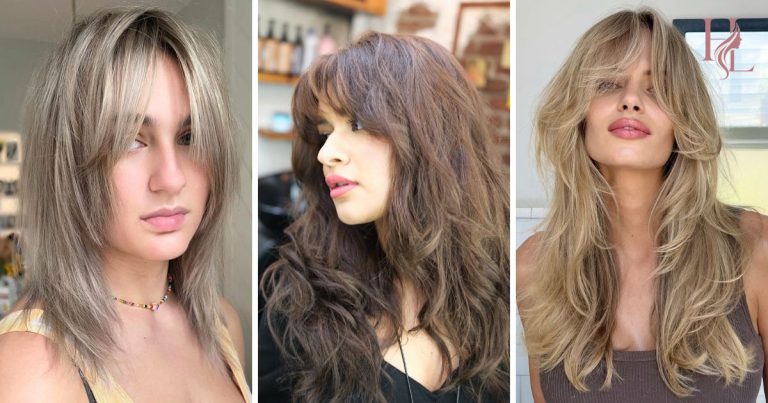
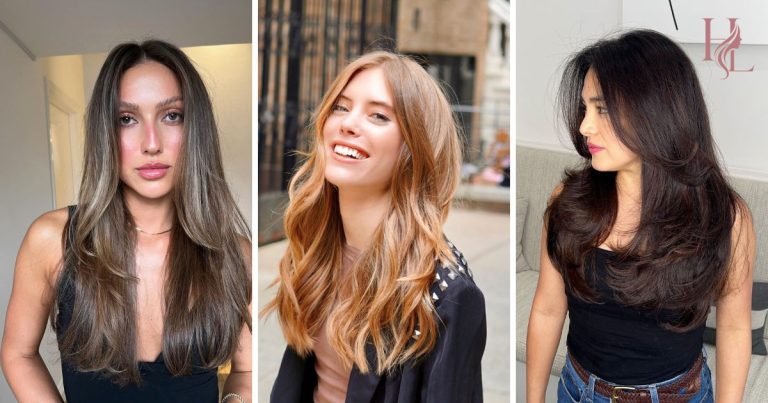
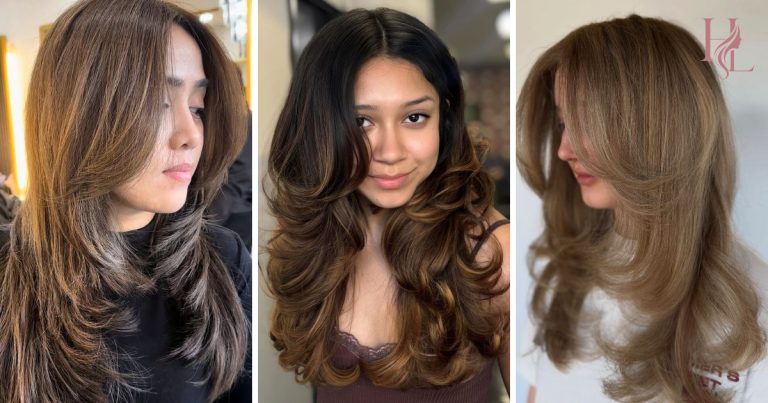
27 Different Haircuts for Long Hair: A Complete Style Guide
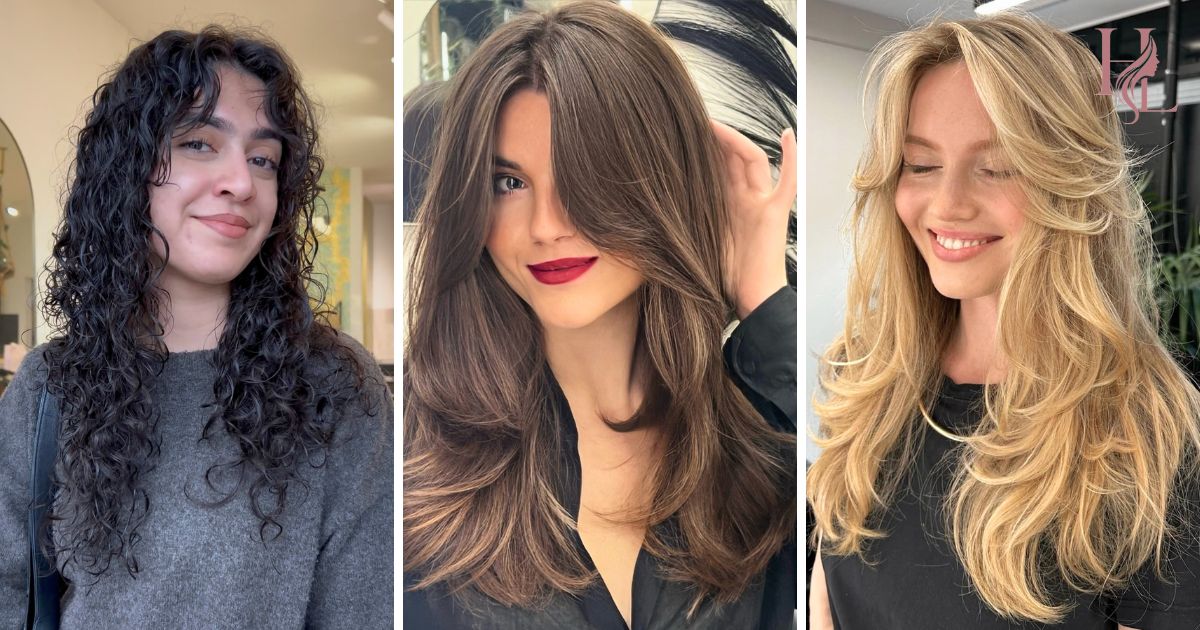
Long hair does not need to look flat or shapeless. The right haircut can add movement, support your natural texture, remove unwanted weight, and make daily styling easier.
You have many options. You can keep a solid length with a blunt cut. You can add soft movement with long layers. You can also choose a bold shape, such as a wolf cut, shag, hime cut, or jellyfish cut.
But which option will work with your hair?
This guide covers 35 different haircuts for long hair. You will learn how each cut looks, who may enjoy it, how much styling it needs, and what to expect after you leave the salon.
What Creates a Long Haircut?
Table of Contents
Think of a haircut like a house. The perimeter forms the foundation. The layers create the rooms. The bangs and face-framing pieces add the final details.
Most long haircuts combine four main elements:
| Haircut element | What it changes | Popular choices |
|---|---|---|
| Perimeter | Controls the shape of the ends | Blunt, rounded, U-shaped, V-shaped |
| Layers | Add movement or remove weight | Long, short, invisible, choppy |
| Face frame | Shapes the front sections | Cheek, chin, jaw, or collarbone length |
| Bangs | Change the front of the haircut | Curtain, blunt, wispy, side-swept |
One haircut can use several elements. You can ask for a U-shaped perimeter, long butterfly layers, and curtain bangs in the same appointment.
Know Your Hair Before You Choose a Cut
Your haircut should work with your real hair, not only with a styled Pinterest photo.
Consider these five points first:
- Texture: Is your hair straight, wavy, curly, or coily?
- Density: Do you have a low, medium, or high number of strands?
- Strand size: Does each strand feel fine, medium, or coarse?
- Routine: Do you air-dry, diffuse, blow-dry, or use hot tools?
- Daily style: Do you wear your hair down, braided, or tied back?
Hair density and strand size are not the same. You can have many fine strands or fewer coarse strands. That difference affects how layers behave.
A good stylist studies your hair before making the first cut.
Quick Comparison of Long Haircuts
| Haircut | Main result | Styling needs | Grow-out |
| Blunt cut | Solid-looking ends | Low | Easy |
| U-shaped cut | Soft back curve | Low | Easy |
| V-shaped cut | Defined back point | Low | Easy |
| Invisible layers | Hidden movement | Low | Very easy |
| Classic long layers | Balanced movement | Medium | Easy |
| Butterfly cut | Large, bouncy layers | Medium to high | Moderate |
| Shag | Lived-in texture | Low to medium | Easy |
| Wolf cut | Short crown and long back | Medium | Noticeable |
| Curly layered cut | Better curl shape | Low to medium | Easy |
| Curtain bangs | Sweeping front detail | Medium | Easy |
| Blunt bangs | Strong fringe line | High | High |
| Hime cut | Sharp front sections | Medium | Noticeable |
27 Best Haircuts for Long Hair
These cuts change the outside line of your hair. They can create a fresh shape without adding many layers.
1. One-Length Blunt Cut
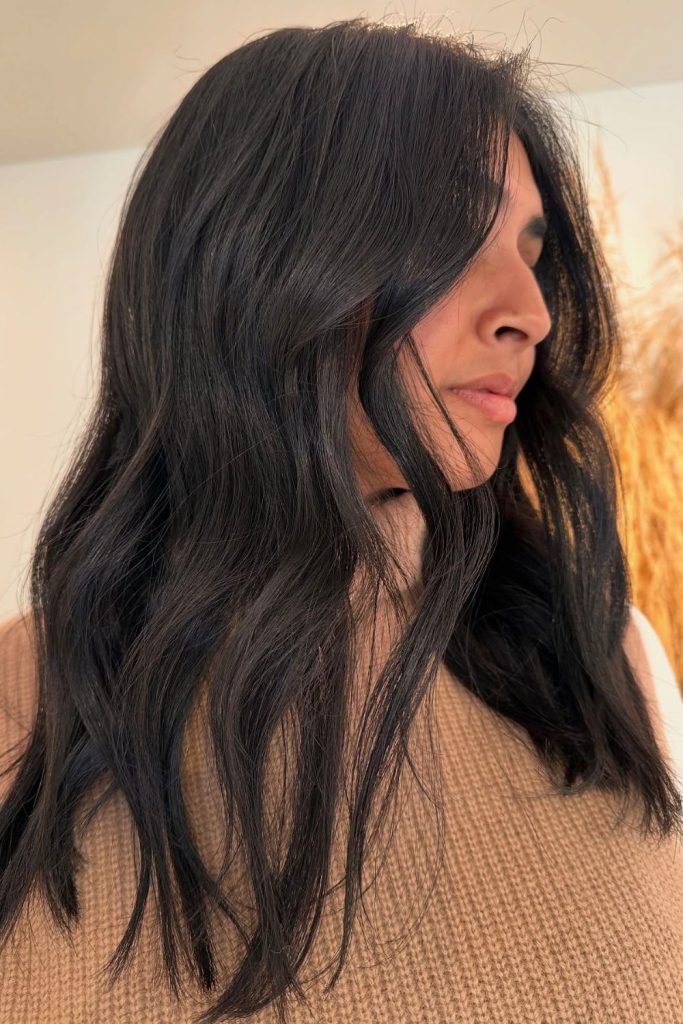
A blunt cut keeps almost every strand at the same length. The stylist creates a straight, solid line along the ends.
This cut helps the bottom section look substantial. It works well with straight hair because the clean line stays easy to see. It can also support fine hair when you want to protect the density at the ends.
Why choose it?
- You want a clean finish.
- You wear braids or ponytails.
- You want low daily maintenance.
- You do not want short layers.
Real-life note: Thick hair may feel heavy with a full blunt cut. Your stylist can add light internal movement without changing the solid perimeter.
2. U-Shaped Haircut

A U-shaped cut keeps the center longer than the sides. The ends form a soft curve across your back.
This shape gives long hair more flow than a straight-across cut. It also keeps more fullness than a sharp V-cut.
A U-shape works with:
- Straight hair
- Thick waves
- Long curls
- Classic layers
- Butterfly layers
Professional stylist guidance describes the U-cut as a softly blended shape rather than a sharp step between the sides and back. See the professional U-cut explanation.
Real-life note: The change may look subtle from the front. You will see the full shape when you view the hair from behind.
3. V-Shaped Haircut
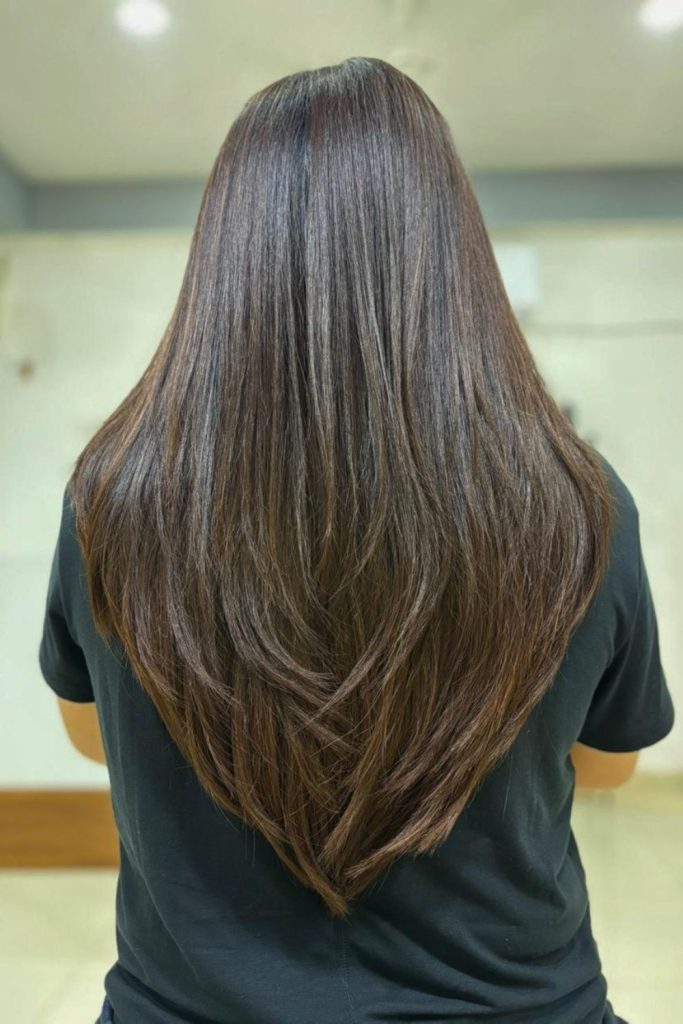
A soft V-cut creates a gentle point at the center of the back. The stylist blends the sides gradually into that point.
This cut keeps the longest section centered. It adds more direction than a U-shaped haircut but still protects some density at the bottom.
A soft V works well with long layers and waves. It can also make very long hair look more planned and polished.
Real-life note: The center may look much longer than the sides when you bring all your hair forward.
4. Rounded Perimeter
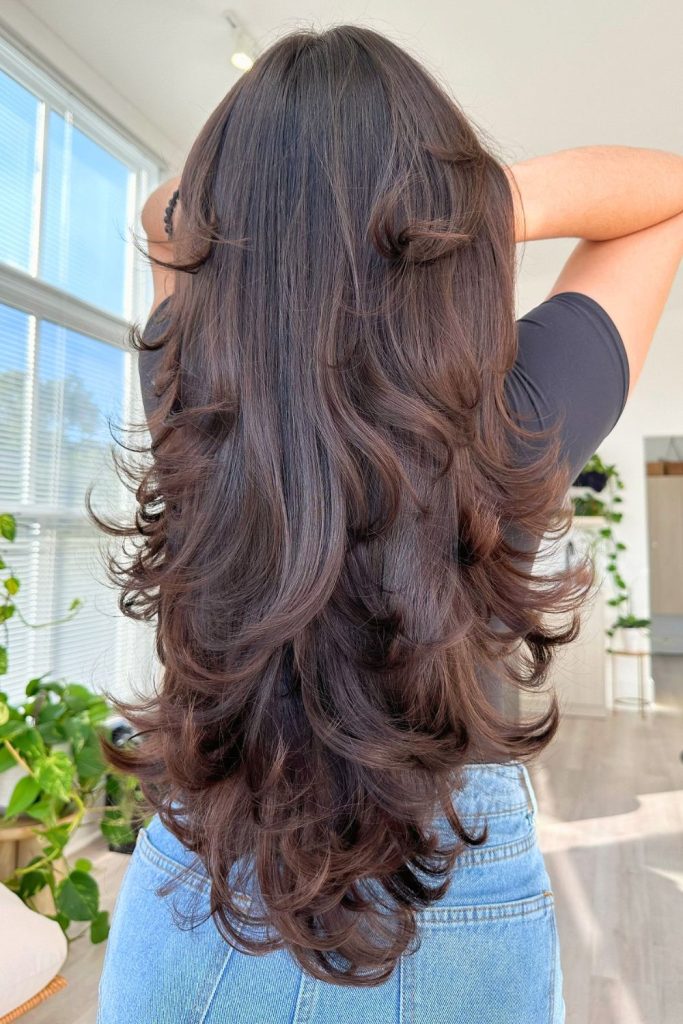
A rounded perimeter sits between a blunt cut and a U-cut. It uses a light curve while keeping the sides full.
This haircut gives the ends a softer line. It works well for people who want a small change without adding obvious layers.
The rounded shape also grows easily. You can wait longer between appointments if your ends remain in good condition.
This cut works like a soft frame around a picture. It adds shape without taking attention away from your length.
5. Long Angled Haircut
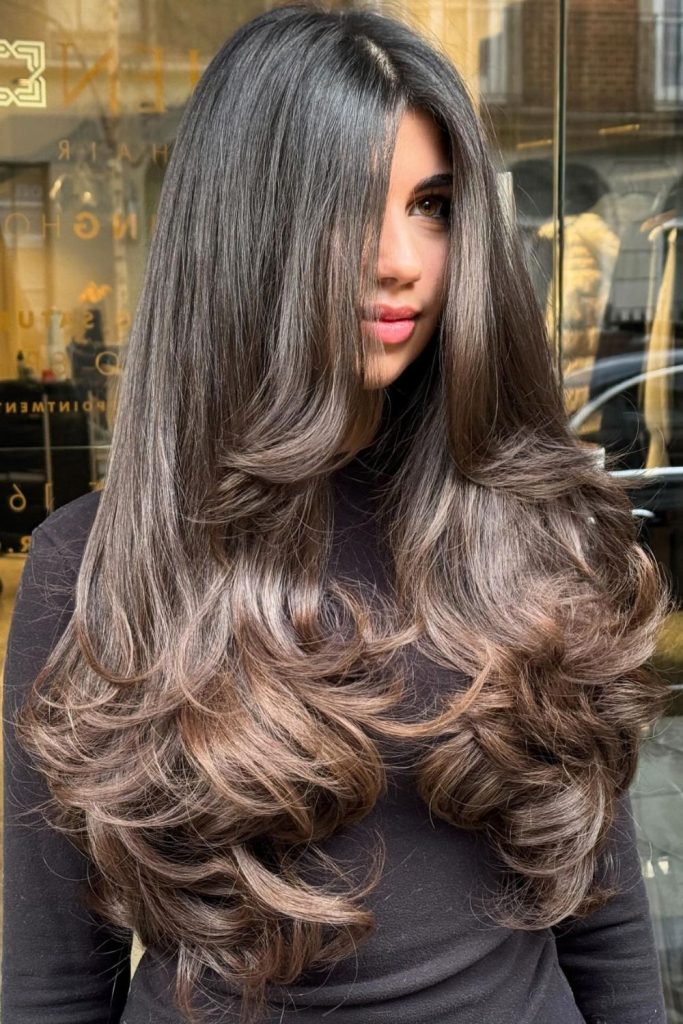
A long angled haircut changes the length between the front and back. The stylist can leave the back longer or create longer sections near the front.
This cut differs from face-framing layers. An angled haircut changes the main perimeter. Face-framing layers only change selected front pieces.
A subtle angle creates quiet movement. A strong angle creates a more graphic result.
Real-life note: Your part can affect the balance. Ask your stylist to check both sides before you leave the salon.
6. Asymmetrical Long Haircut
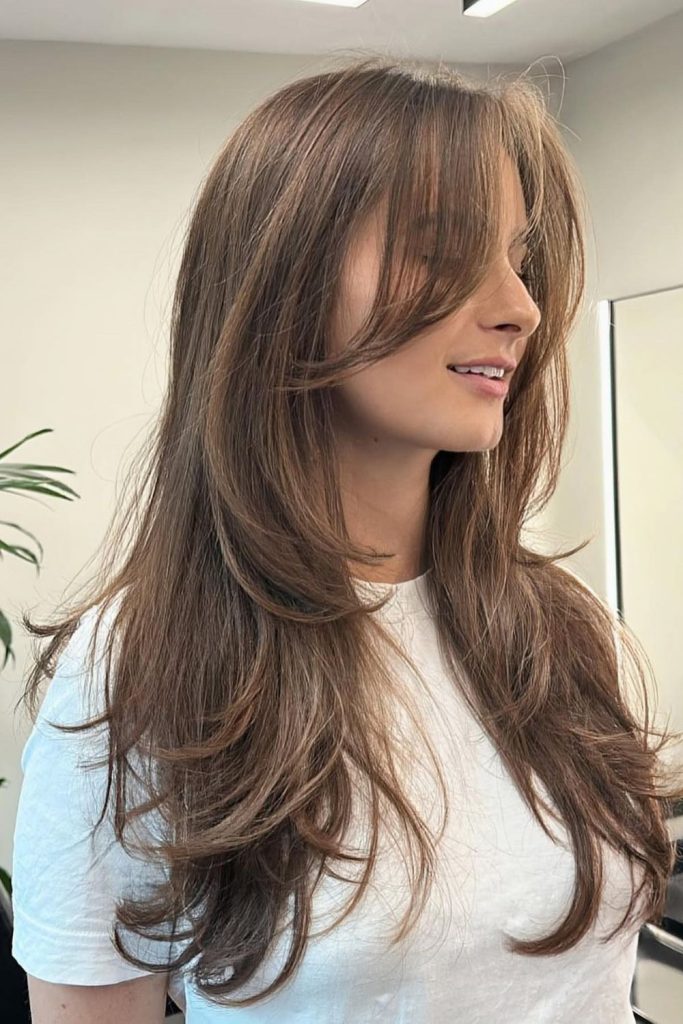
An asymmetrical cut leaves one side longer than the other. The difference can look soft or dramatic.
This haircut gives long hair a modern and artistic shape. It often works with a deep side part or a bold front section.
You should think about your normal part before choosing it. The shape may change when you move your part to the opposite side.
Choose asymmetry because you enjoy the contrast, not because you expect both sides to behave in the same way.
7. Classic Long Layers
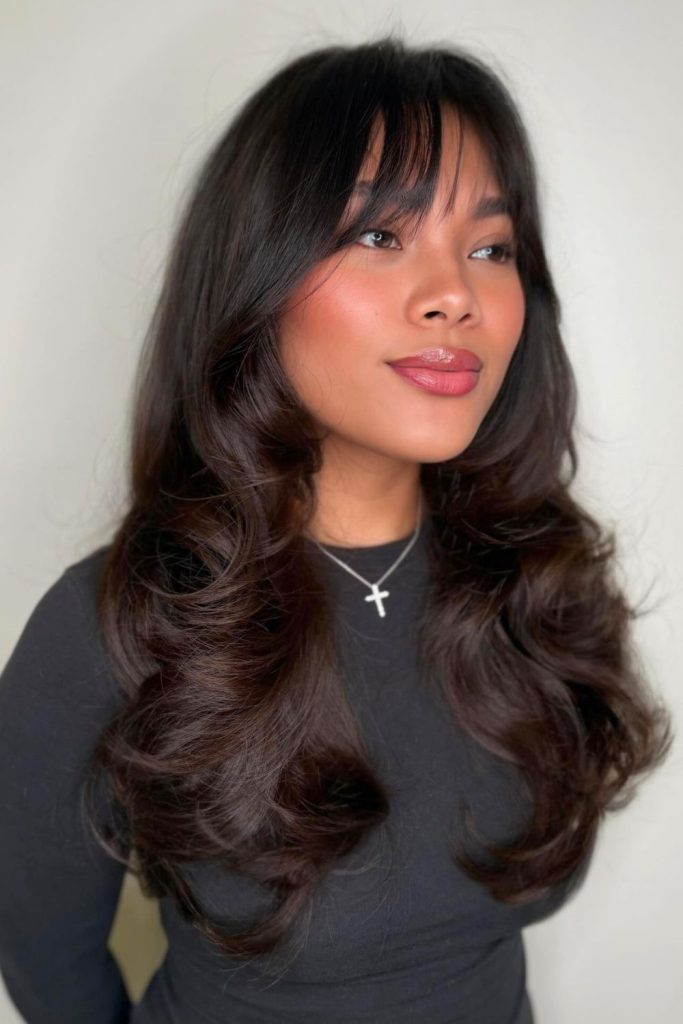
Classic long layers create smooth movement from the upper lengths to the ends. The shortest sections often start below the chin, shoulders, or collarbone.
This is one of the most flexible long layered haircuts. The stylist can adjust the placement for different textures and densities.
Long layers can:
- Add movement to straight hair
- Support natural waves
- Remove weight from dense hair
- Help curls form a clearer shape
- Make long hair easier to style
Real-life note: A salon blowout can make the layers look larger. Air-drying will usually create a softer result.
8. Subtle Layers Near the Ends
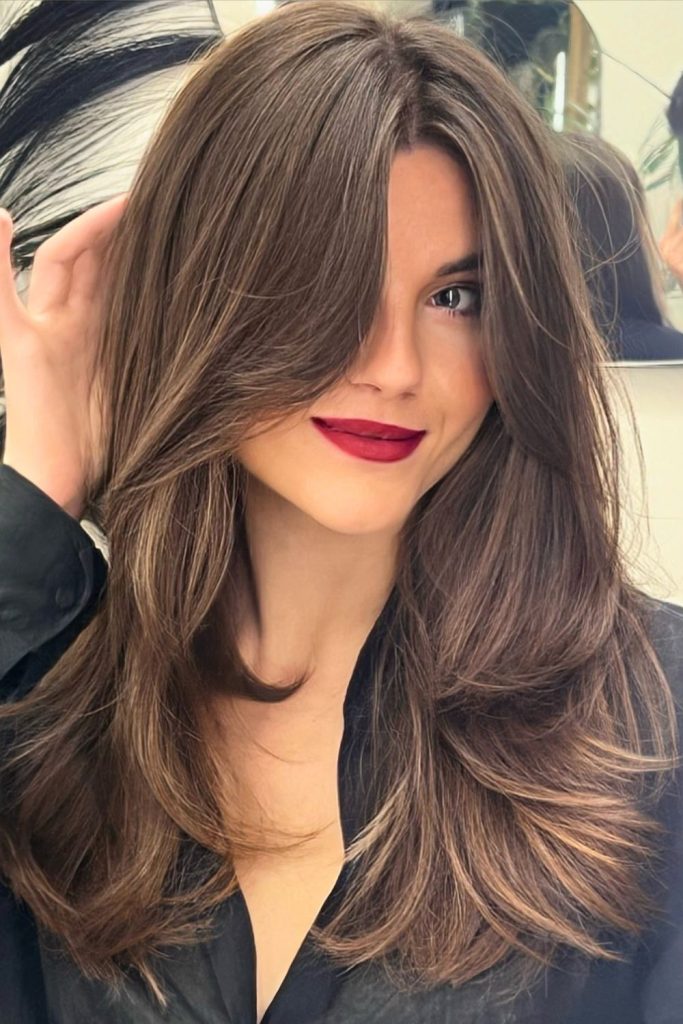
Subtle layers sit mainly within the last few inches of hair. They break up a heavy baseline without creating obvious short sections.
This cut suits people who like one-length hair but want a little movement. It also keeps most strands long enough for braids and ponytails.
The change may look small, but it can help the ends bend and move more freely.
Choose subtle layers if you want:
- Easy grow-out
- A solid-looking perimeter
- Minimal styling
- A quiet update
9. Invisible Layers
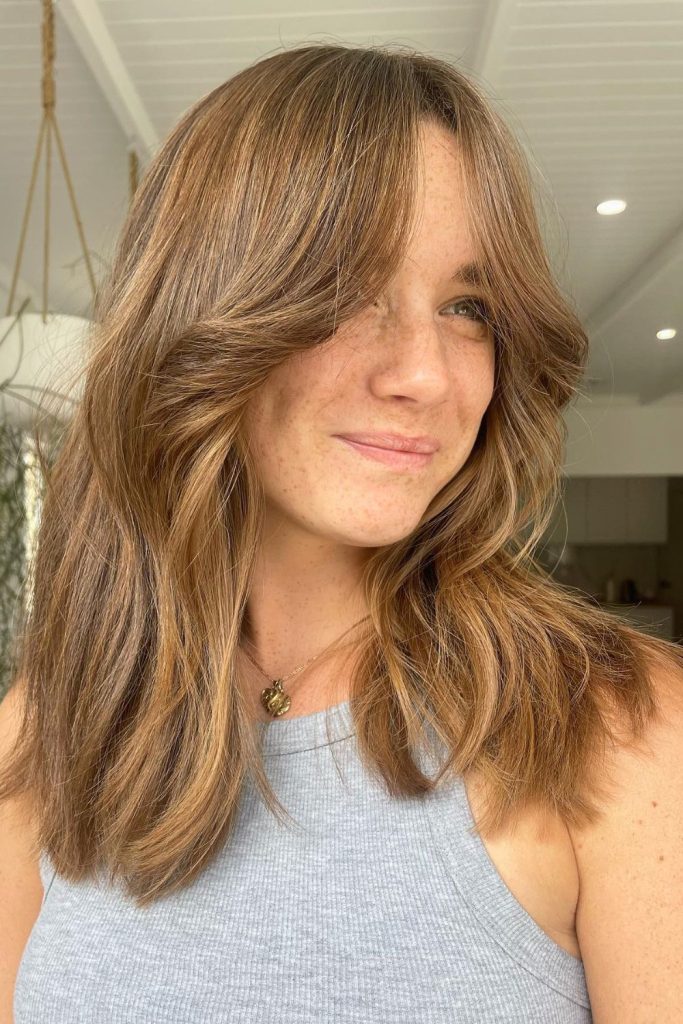
Invisible layers sit inside the haircut. They remove weight without creating clear lines on the surface.
The stylist keeps the outer section smooth. The shorter internal pieces help the hair move underneath.
Matrix describes invisible layers as a soft technique that adds movement without showing obvious steps. The layers also grow out smoothly. Read the professional explanation.
Real-life note: Invisible layers will not produce large, separate curves. They improve movement quietly.
10. Internal Layers
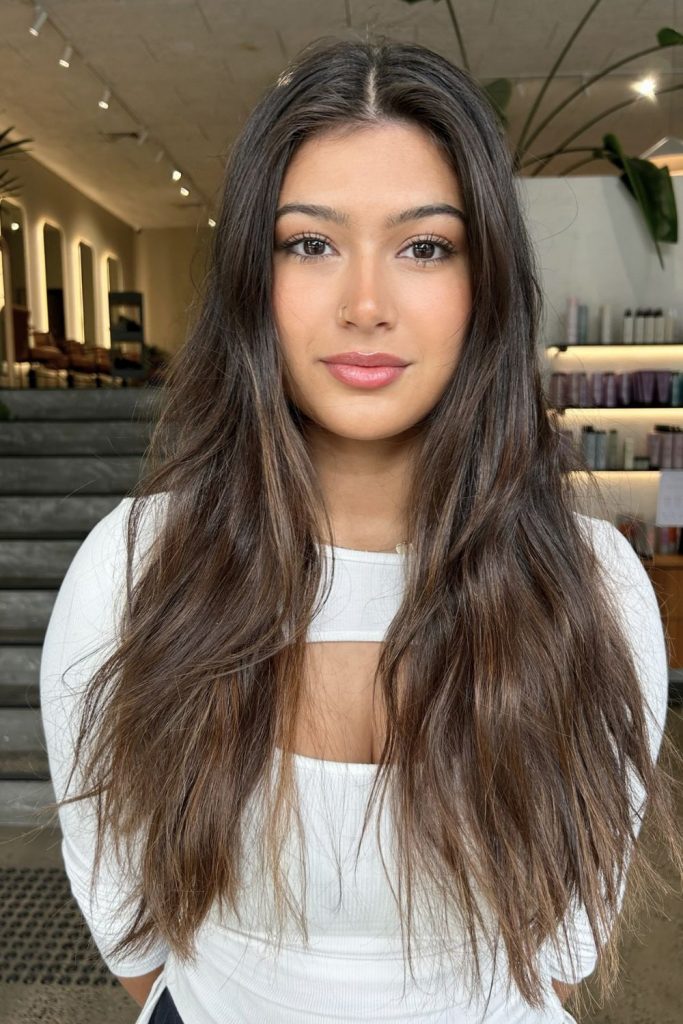
Internal layers remove weight from selected areas under the surface. They can help dense hair feel lighter while keeping the outer line full.
Your stylist may place these layers near:
- The back of the head
- The sides
- The middle lengths
- Heavy areas around the crown
Internal layers need careful placement. Poor placement can cause short sections to push against the surface.
Ask where your stylist plans to remove weight. Do not simply ask for “a lot of thinning.”
11. Face-Framing Layers
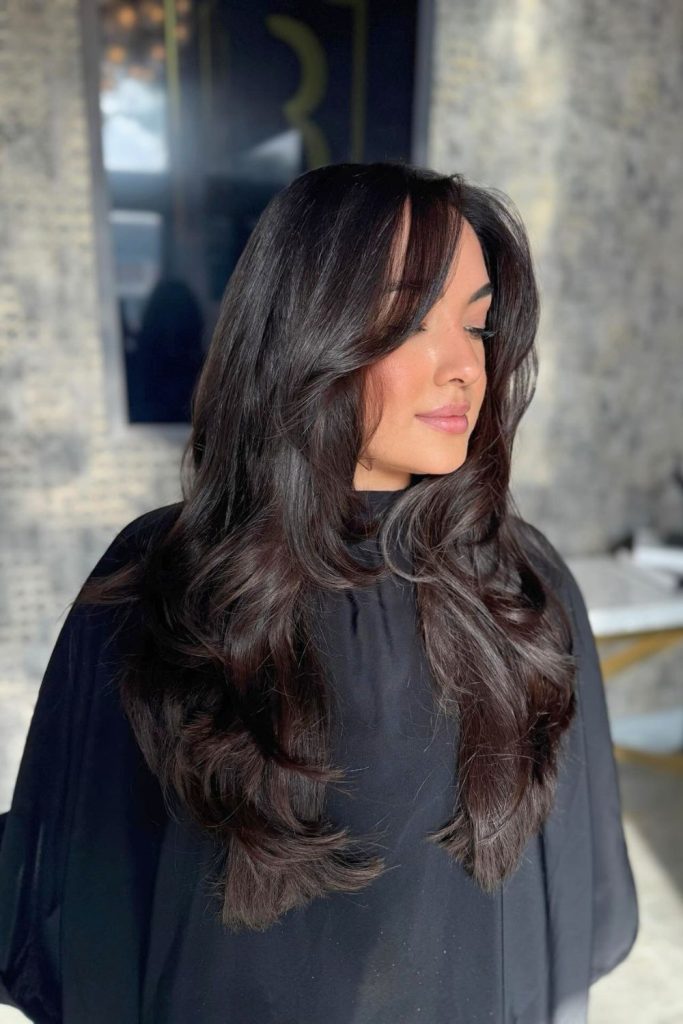
Face-framing layers create shorter pieces around the front. These pieces gradually connect to the longer hair.
You can start the shortest section near the cheek, jaw, chin, collarbone, or chest. Each starting point creates a different amount of movement.
Do you wear a ponytail every day? Keep the shortest section long enough to reach your hair tie.
Professional stylists recommend discussing exercise, clips, ponytails, and headbands before choosing the shortest front section. See the face-framing guide.
12. Butterfly Haircut
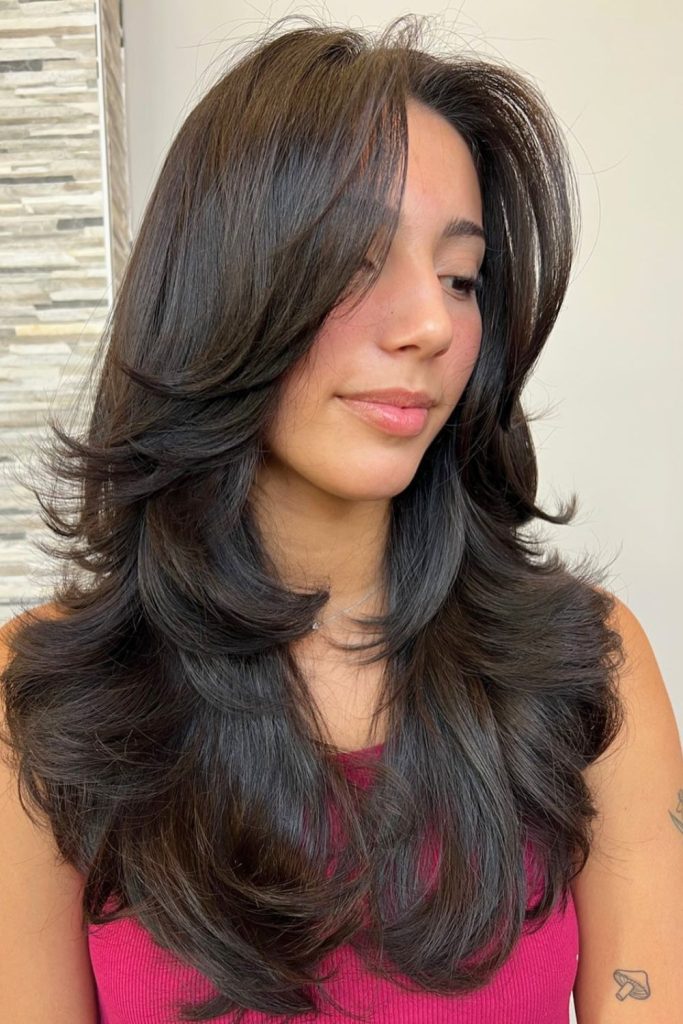
A butterfly haircut uses two main layer groups. Shorter layers create movement around the face and crown. Longer layers protect the overall length.
The layers spread like butterfly wings when you style them away from your face. A round brush, rollers, or large curls make the shape easier to see.
A butterfly cut usually looks softer than a wolf cut. It also maintains a stronger connection between the short and long sections. Read how professionals define the butterfly cut.
Real-life note: The cut may look like normal long layers when you air-dry straight hair.
13. Waterfall Layers
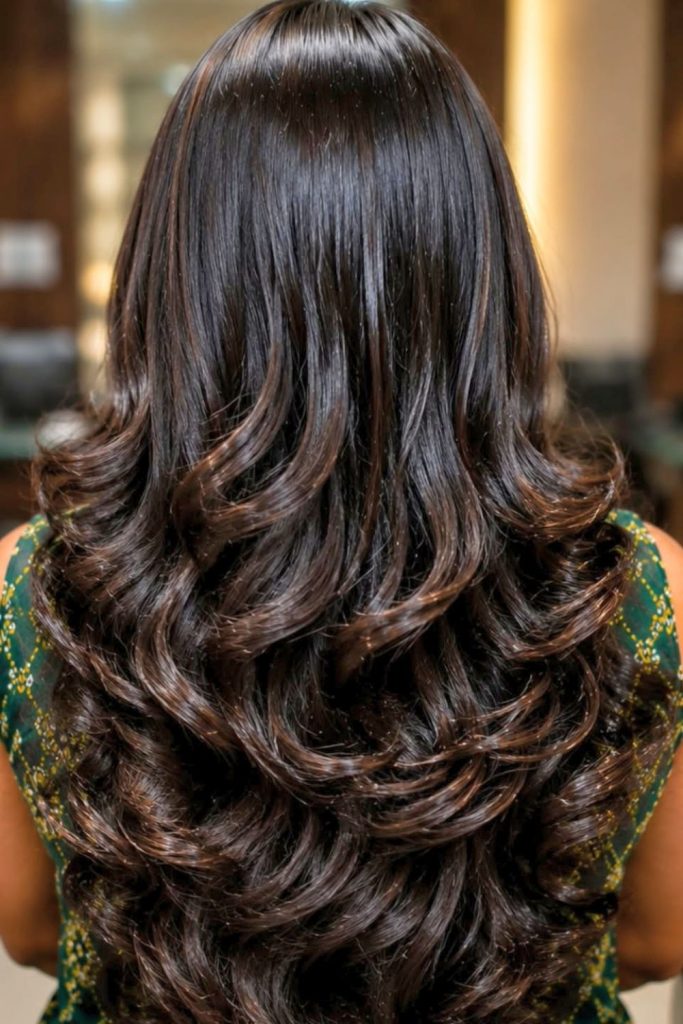
Waterfall layers flow from shorter upper sections into longer lower sections. Each layer connects with the next one.
The cut creates a smooth, falling effect. It can support waves and curls by gradually removing weight.
Waterfall layers feel softer than choppy layers. They also create less contrast than a wolf or octopus cut.
This option may suit you if you want:
- Flowing movement
- Blended layers
- A soft back shape
- Natural-looking waves
- Easy grow-out
14. Feathered Layers
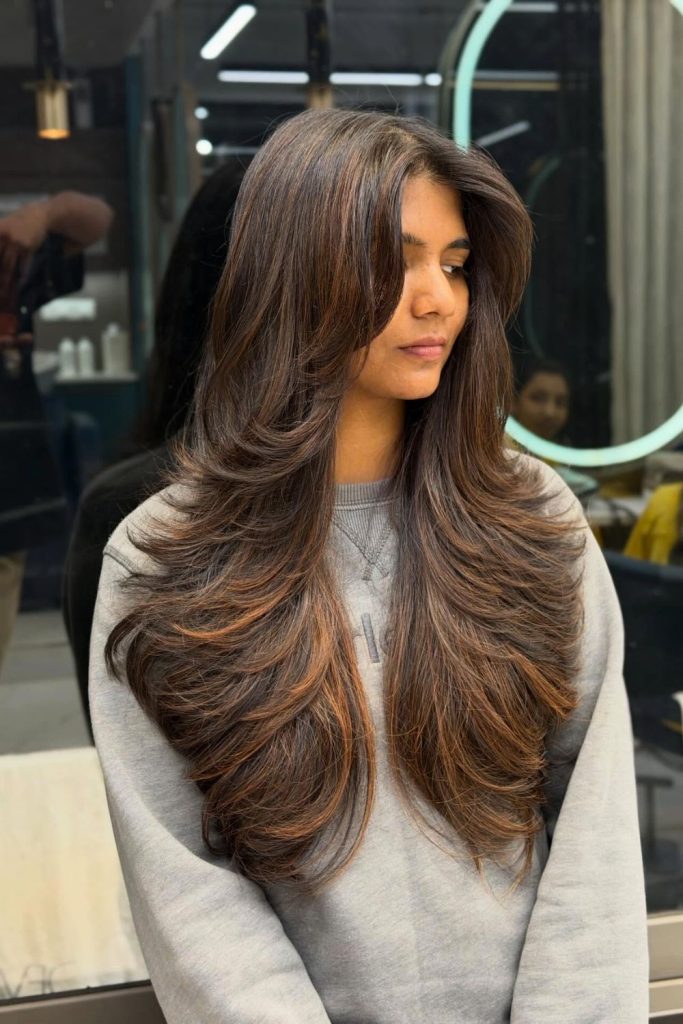
Feathered layers create light ends that sweep away from the face. The stylist softens and separates the edges.
This cut can make long hair feel airy. It works well with straight, wavy, and blow-dried hair.
The front pieces often show the strongest feathered effect. You can flip them outward or curve them under.
Real-life note: Sleep and humidity can change the direction of the ends. You may need to reshape the front pieces in the morning.
15. Choppy Long Layers
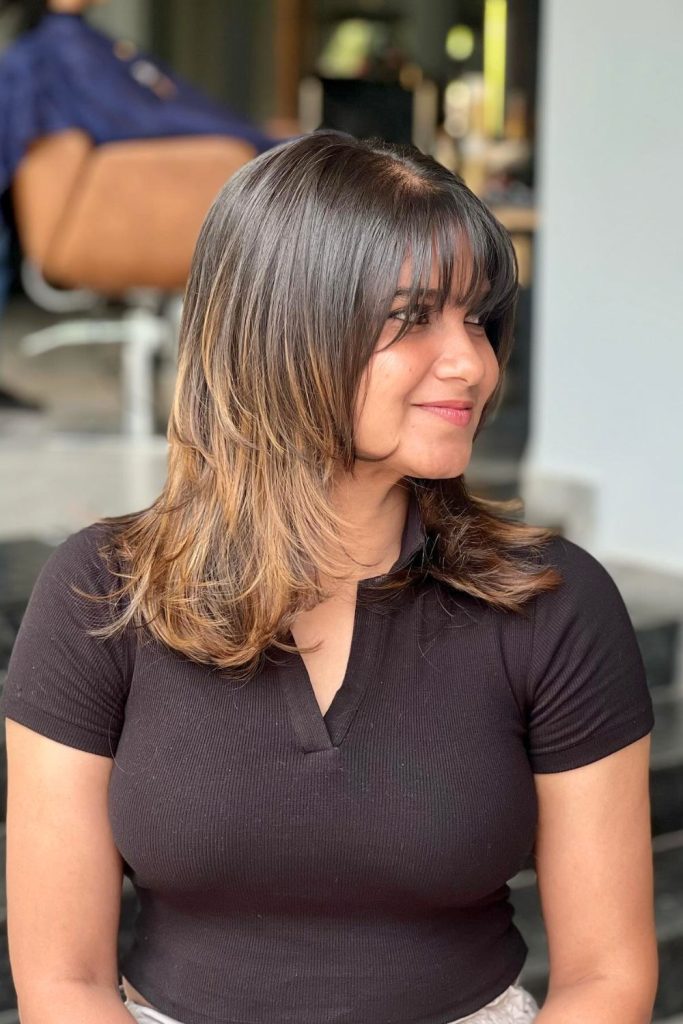
Choppy layers create visible differences between sections. They add a piecey and relaxed finish.
This cut works well with natural waves and textured styling. It can also stop straight hair from looking too uniform.
Your stylist should protect the lower density. Too many short layers can leave the ends thinner than you expect.
Choose choppy layers if you like:
- Visible texture
- Separated ends
- Messy waves
- A bold outline
- Casual styling
16. Long Shag Haircut

A long shag combines many layers, crown movement, face-framing pieces, and often bangs.
The haircut creates texture from the top to the ends. It can support waves and curls without a polished blowout.
A shag looks more broken and relaxed than classic long layers. You can choose a soft shag or a bold version with short crown pieces.
Real-life note: The main length grows out easily. The bangs and crown layers may lose their shape sooner.
17. Wolf Cut for Long Hair

A wolf cut combines a shag with a mullet-inspired shape. The crown stays shorter and fuller. The back remains longer.
This cut creates stronger contrast than a butterfly haircut. The layers also look more textured and less polished.
A stylist can adapt the wolf cut for straight, wavy, curly, or coily hair. Fine hair may need softer layers to protect the ends. See the professional wolf-cut guide.
Real-life note: The crown may need mousse, diffusing, or root styling to keep its height.
18. Octopus Haircut
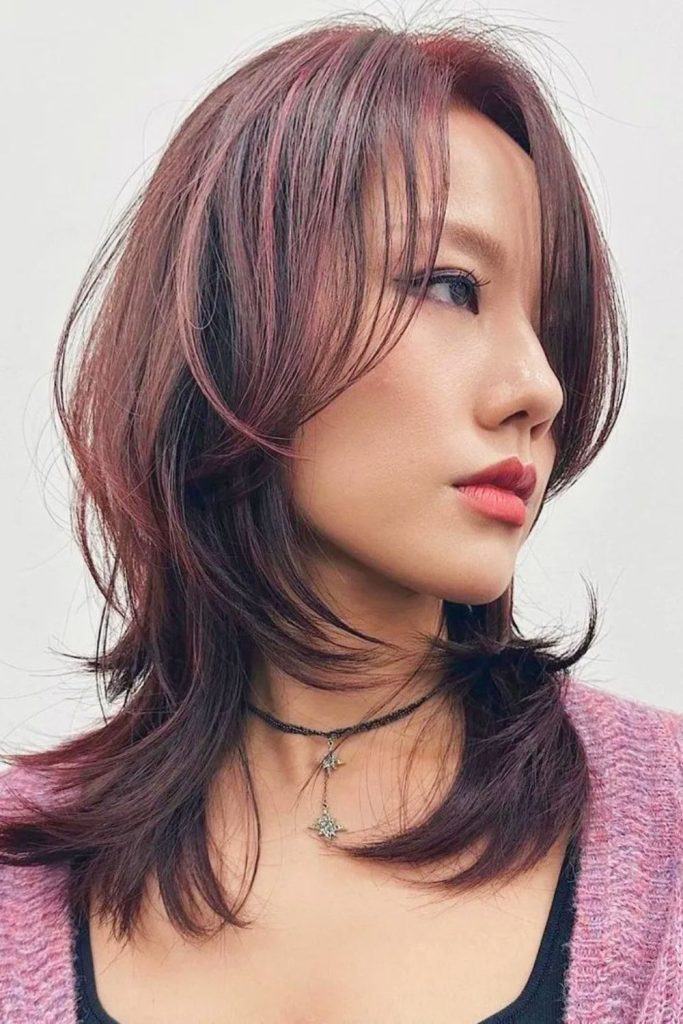
The octopus haircut creates a full upper shape and long, narrow sections underneath.
The rounded crown represents the body of an octopus. The longer lower layers create the “tentacles.”
This cut looks more separated than a butterfly cut. It also creates a stronger top-heavy shape.
Before choosing it, decide how much density you want to keep at the bottom.
Real-life note: The lower lengths may feel much lighter after the cut. Ask for a softer octopus shape if you want fuller ends.
19. Hush Cut

The hush cut uses soft layers, light face framing, and airy ends. It gives long hair gentle movement.
This haircut feels calmer than a shag and more textured than classic layers. Wispy or curtain bangs often complete the style.
The hush cut works well for people who want a natural and easy finish.
Its main benefits include:
- Soft grow-out
- Light movement
- Flexible styling
- Gentle face framing
- No sharp layer lines
20. Disconnected Layers
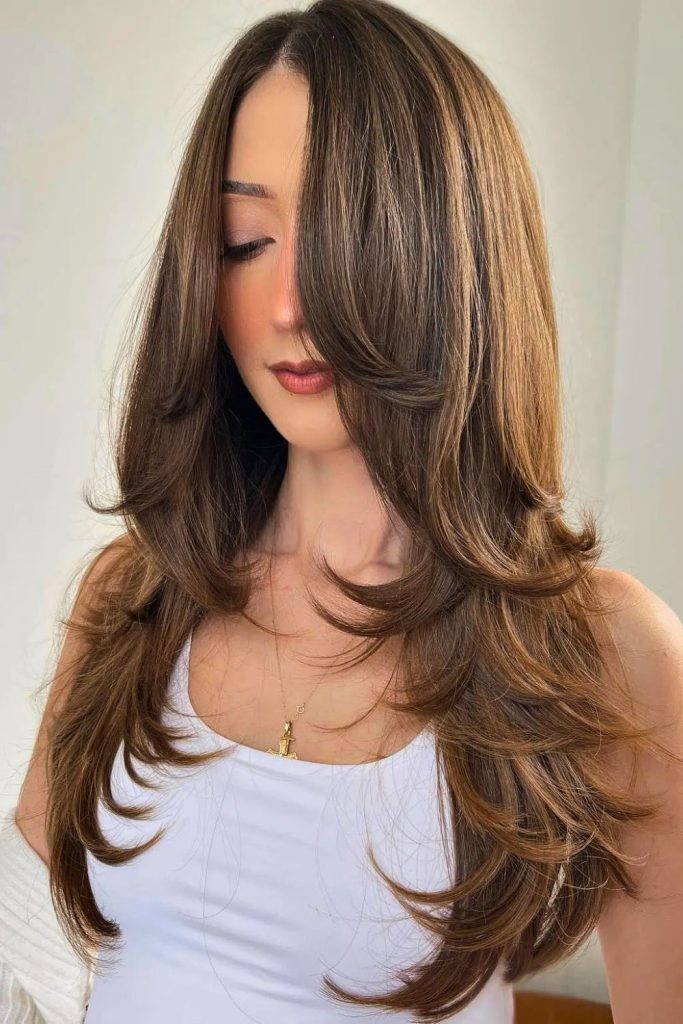
Disconnected layers do not blend fully into the longer hair. The stylist creates a clear difference between the short and long sections.
This technique appears in wolf, octopus, mullet, hime, and jellyfish haircuts.
A soft disconnection can add interest. A strong disconnection can create an editorial shape.
Real-life note: These layers take time to reach a single length. Discuss the grow-out before you commit.
21. Razor-Cut Layers
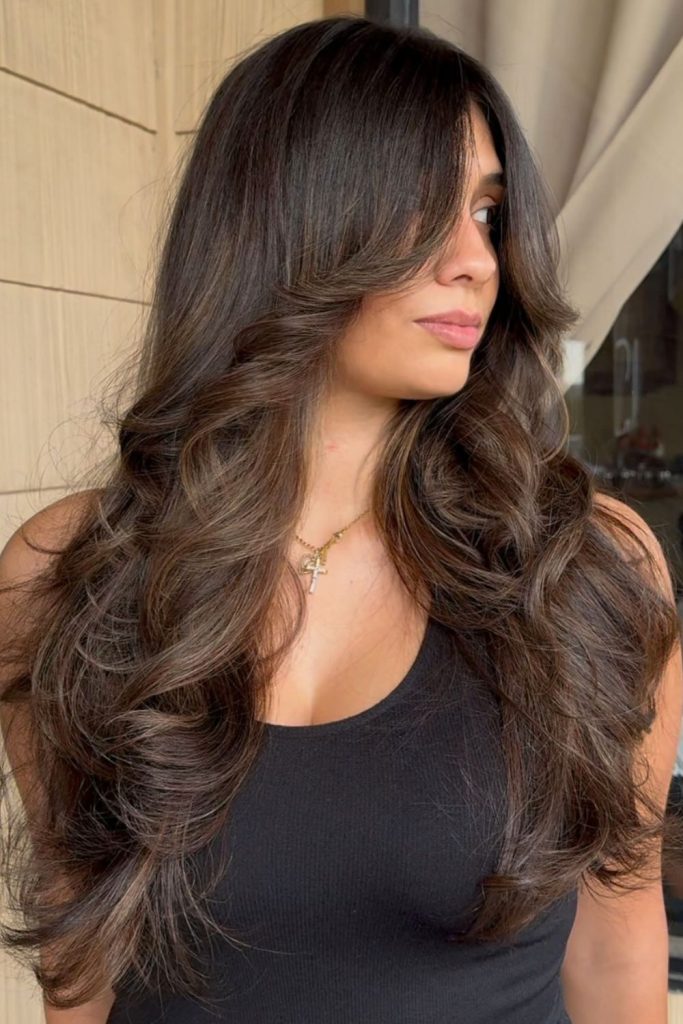
A stylist uses a guarded hair razor to create soft and separated ends. Razor cutting refers to the tool and method, not to a single fixed hairstyle.
The technique can support:
- Feathered layers
- Wispy bangs
- Shag haircuts
- Soft face framing
- Piecey ends
The stylist should first check your hair condition. Fragile or heavily processed ends may need a more controlled method.
Ask your stylist why a razor will help your specific hair.
22. Long Haircut for Straight Hair

Straight hair shows lines clearly. It can display blunt, U-shaped, V-shaped, hairline, and face-framing cuts with strong detail.
Layers can add movement, but the stylist must place them with care. Uneven sections may remain easy to see.
If you air-dry your hair, choose a cut that works without a round-brush finish. If you love blowouts, butterfly or ’90s layers can give you more styling options.
23. Long Haircut for Fine Hair
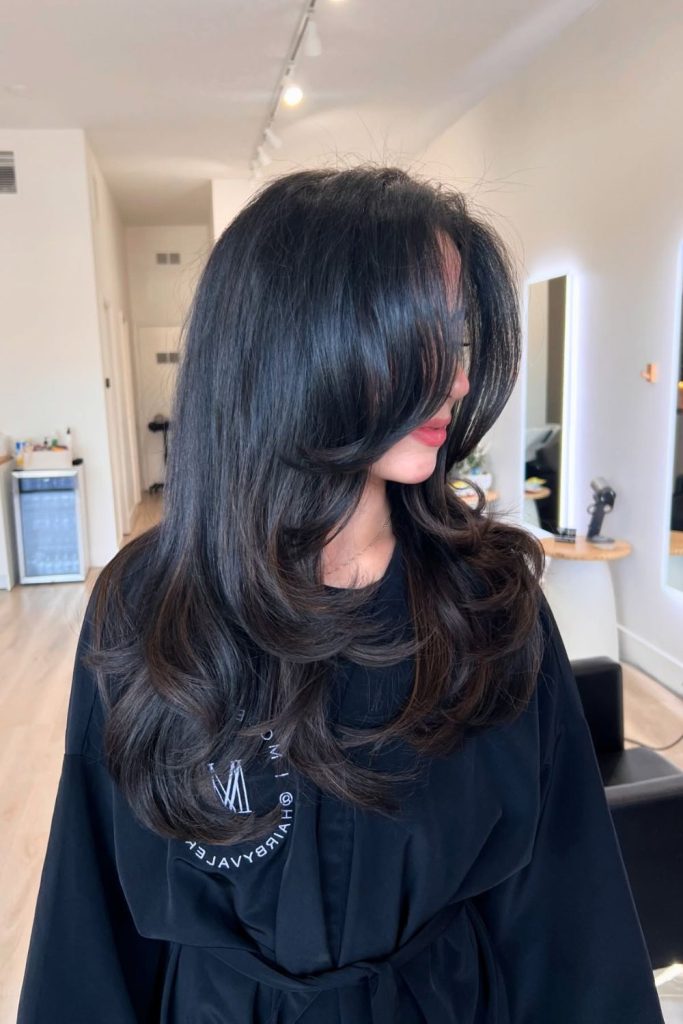
Fine hair has small individual strands. It can have low, medium, or high density.
A blunt perimeter can help the ends look more solid. A soft U-cut or controlled long layers can also add movement without removing too much weight.
Consider these options:
- Blunt cut
- Soft U-shaped cut
- Invisible layers
- Collarbone face framing
- Minimal end layers
Ask your stylist to protect the last few inches. That area often controls how full the overall cut appears.
24. Long Haircut for Thick Hair
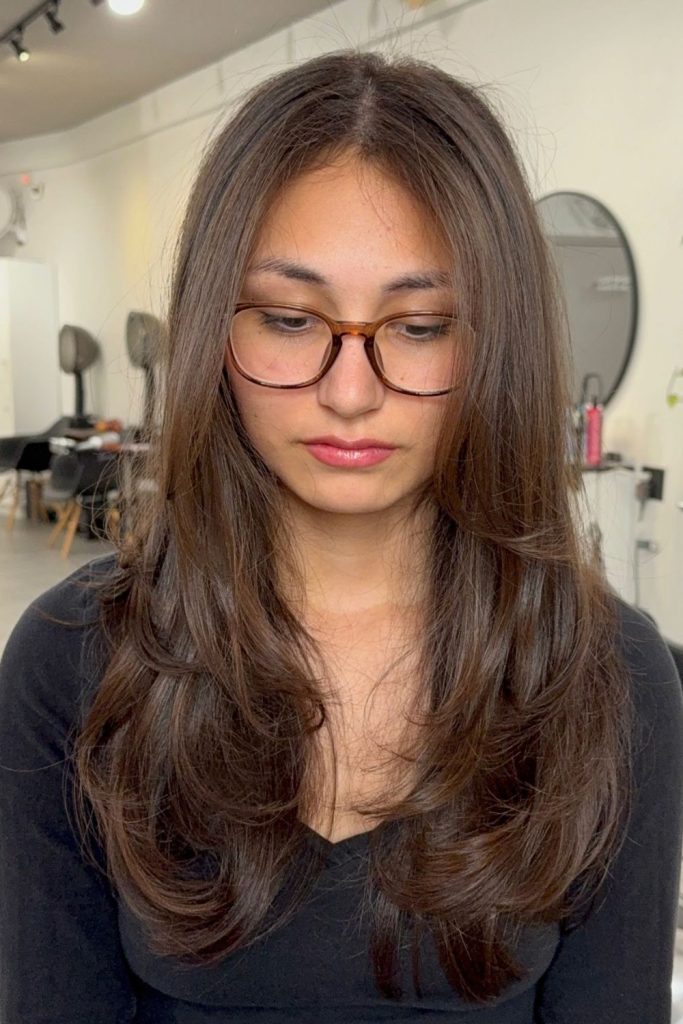
Thick or dense hair can hold more layers. Long layers can remove weight and help the hair move.
You can try:
- U-shaped layers
- Butterfly layers
- Waterfall layers
- Internal layers
- Long shag
- Soft wolf cut
Do not remove weight from every area. Your hair still needs enough structure to support the final shape.
Tell your stylist where the hair feels heavy. This gives clearer direction than asking to thin everything.
25. Long Haircut for Wavy Hair
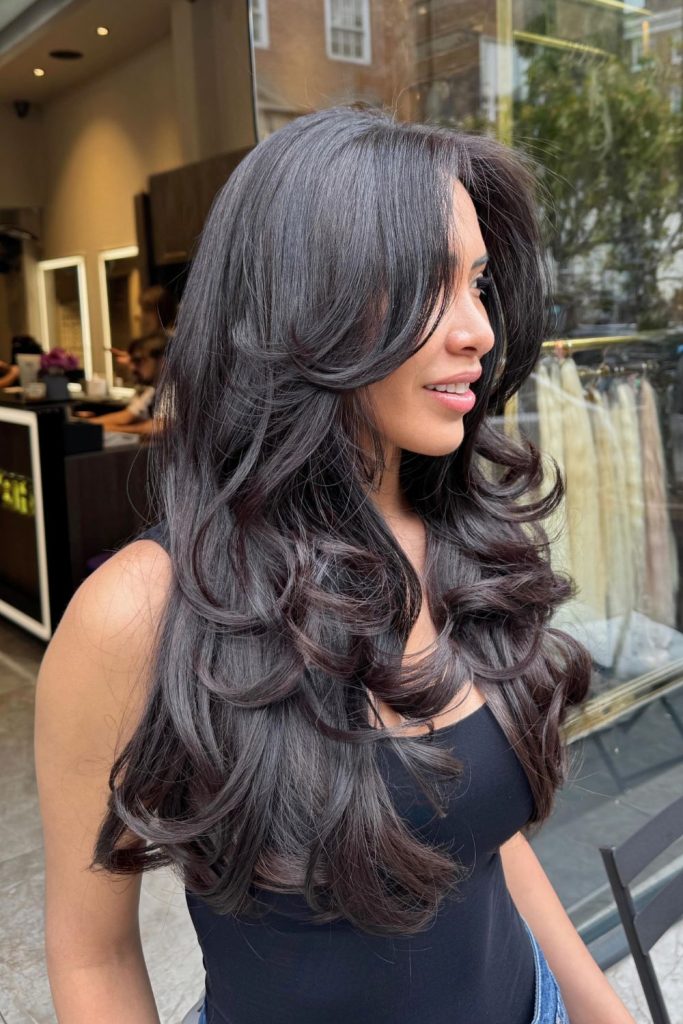
Wavy hair often works well with U-shaped cuts, long layers, waterfall layers, and shags.
The right layers can support the wave pattern. Too many layers can separate the waves or create unwanted expansion.
Visit the salon with your normal texture when possible. Your stylist needs to see where each wave bends.
Bring a photo of your real wash-day hair. A heavily curled Pinterest photo cannot show how your natural waves behave.
26. Curl-by-Curl Haircut
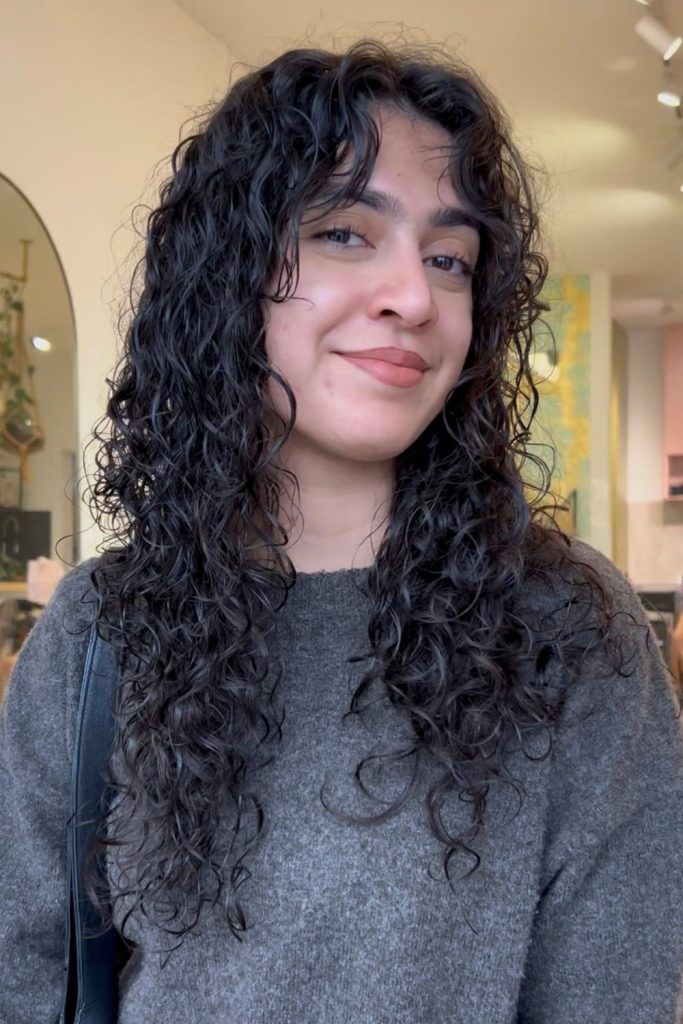
A curl-by-curl cut shapes individual curls or small groups of curls. Many stylists perform this cut on dry hair.
Dry hair allows the stylist to see the natural pattern and shrinkage. However, some professional curly methods use wet cutting. Other stylists combine both techniques.
No single method suits every curl pattern. The stylist’s experience matters more than a trend name. Read the expert overview of curly cutting methods.
Judge the haircut after your own wash day. Your products and styling method may change the final shrinkage.
27. Long Hair With Curtain Bangs
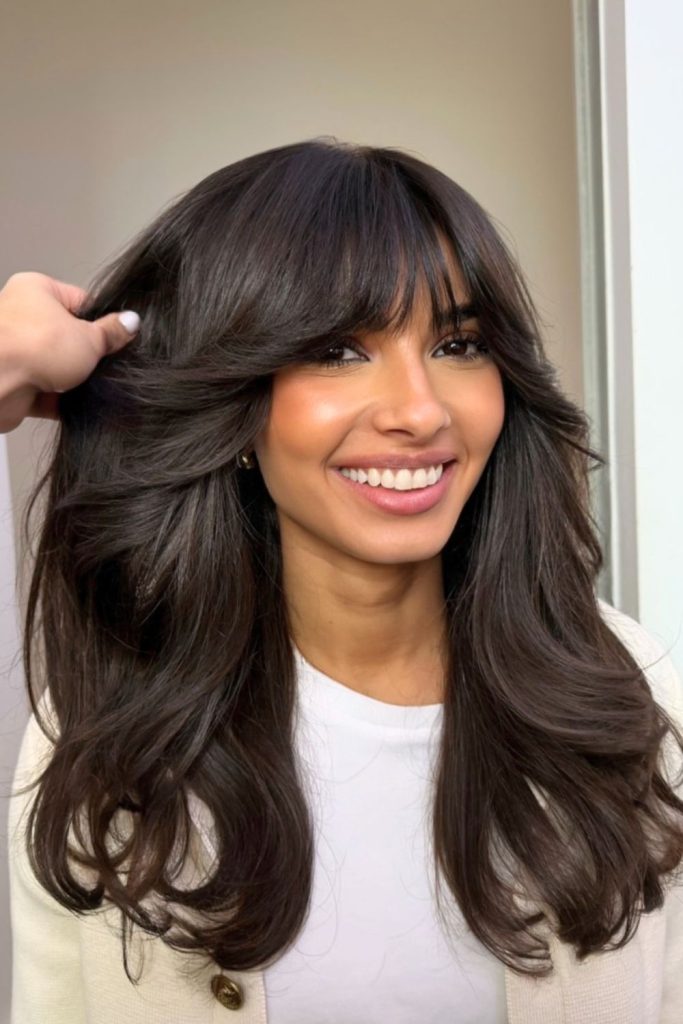
Curtain bangs stay shorter near the center and grow longer toward the sides. They open around the face like curtains around a window.
These bangs connect well with face-framing layers, butterfly cuts, shags, and long waves.
Curtain bangs offer more flexibility than blunt bangs. You can part, pin, or blend them as they grow.
Real-life note: They may need a quick morning reset. Sleep, oil, humidity, and cowlicks can change their direction.
Bonus Statement Haircuts for Long Hair
Some statement cuts overlap with the styles above. However, they deserve special attention because they create clear visual contrast.
Hime Cut
The hime cut pairs long hair with short, blunt sections near the cheeks or jaw. Many versions also include straight bangs.
The front sections do not blend into the back. They create a sharp and clear step.
This haircut works especially well when you want a graphic shape. It differs from standard face framing because the front pieces remain disconnected.
Real-life note: The side sections may not fit into a ponytail.
Jellyfish Haircut
The jellyfish haircut combines a short, rounded top with much longer hair underneath.
The upper section often looks like a bob. The lower section creates a separate curtain of length.
This haircut offers strong contrast. It also requires a long grow-out if you later want one blended length.
Choose a soft jellyfish cut for flexibility. Choose a sharp version if you want the two sections to remain clear.
How to Choose the Right Haircut for Long Hair
Still unsure? Start with your daily life.
Choose by Styling Routine
| Your routine | Haircuts to consider |
| You air-dry most days | Blunt, U-shaped, subtle layers, soft shag |
| You love blowouts | Butterfly, ’90s, feathered layers |
| You wear natural waves | Waterfall layers, U-cut, shag |
| You wear natural curls | Curl-by-curl or rounded curly cut |
| You use ponytails often | Blunt cut, long layers, collarbone face frame |
| You want minimal upkeep | Rounded perimeter, U-cut, invisible layers |
| You want a bold change | Wolf, octopus, hime, jellyfish |
Choose by Desired Movement
- Almost no movement: Blunt cut
- Soft movement: Rounded cut or subtle layers
- Natural movement: Classic long layers
- Flowing movement: Waterfall layers
- Large movement: Butterfly layers
- Textured movement: Shag or wolf cut
- Strong contrast: Octopus, hime, or jellyfish cut
Choose by Your Ponytail Habits
Do you keep your hair tied back during work, school, sports, or cooking?
Tell your stylist.
Short front layers may fall around your face. Curtain bangs may need pins or a headband. Long face-framing pieces offer more control.
Your haircut should support your routine rather than fight it.
What People Often Notice After the Salon
The salon finish can hide the daily behavior of a haircut.
| Haircut | Salon appearance | Common result at home |
| Blunt cut | Smooth and solid | Natural texture softens the line |
| Invisible layers | Light movement | The change may look very subtle |
| Butterfly cut | Large and bouncy | Air-drying creates less volume |
| Face framing | Soft front curves | Short pieces leave the ponytail |
| Shag | Full natural texture | Results depend on the wave pattern |
| Wolf cut | Raised crown | Roots may need styling |
| Curly cut | Defined curls | Personal products change shrinkage |
| Blunt bangs | Sharp fringe | Sleep can bend the line |
| V-cut | Clear back point | Side sections look shorter in front |
A useful haircut should still look intentional after you wash it at home.
How Often Should You Trim Long Hair?
Your schedule depends on your haircut, hair condition, styling habits, and growth rate.
Use these ranges as a starting point:
- Blunt or U-shaped cut: 10–16 weeks
- Classic long layers: 10–14 weeks
- Butterfly layers: 8–12 weeks
- Shag or wolf cut: 8–12 weeks
- Curtain bangs: 4–8 weeks
- Blunt bangs: 3–6 weeks
- Healthy minimal layers: Up to three to five months
These ranges are not strict rules. Healthy long hair may need fewer appointments. Detailed bangs or damaged ends may need earlier attention. See the stylist guidance on trim schedules.
How to Protect Your Long Haircut
Your care routine helps the cut keep its shape.
The American Academy of Dermatology recommends choosing products suited to your hair type, applying shampoo mainly to the scalp, using conditioner, detangling gently, and limiting excessive heat exposure. Read the dermatologist-backed hair-care advice.
Follow these simple habits:
- Start detangling at the ends.
- Move upward in small sections.
- Use conditioner after shampooing.
- Apply heat protection before hot tools.
- Use low or medium heat when possible.
- Avoid pulling your hair tightly every day.
- Change the position of ponytails and buns.
- Protect the ends from repeated friction.
- Book a trim when the ends tangle or split.
Tight hairstyles can place repeated stress on the hairline. Dermatologists recommend loosening styles and changing them regularly. See the AAD guidance on tight hairstyles.
FAQs
The best haircut works with your texture, density, and routine. A U-shaped cut with long layers offers a flexible starting point. A blunt cut protects solid ends. A shag supports natural texture. A butterfly cut suits people who enjoy large, styled movement.
Butterfly layers, ’90s layers, shags, and wolf cuts can create more visible volume. The final result depends on your density and styling method. Shorter crown layers can support lift, while round-brush styling or diffusing can make that lift easier to see.
A blunt cut, rounded perimeter, soft U-cut, or invisible layers usually needs less daily work. These cuts keep a stable shape as they grow. Bangs, disconnected layers, and short crown sections normally require more styling and more frequent trims.
Layers can reduce the amount of hair at the bottom. However, controlled long layers can add movement while protecting density. Ask your stylist to keep a solid perimeter and avoid taking too much weight from the last few inches.
Both methods can work. Dry cutting shows the natural curl pattern and shrinkage. Wet cutting gives the stylist more control during sectioning. Some professionals combine both methods. Choose a stylist who understands your texture and how you normally wear it.
Final Thoughts
Different haircuts for long hair can change movement, shape, weight, and daily styling.
Start with your natural texture. Then consider your density, routine, ponytail habits, and desired maintenance.
Choose a blunt or U-shaped cut for a simple result. Try long or invisible layers for gentle movement. Pick a butterfly cut for a bouncy finish. Choose a shag, wolf, hime, or jellyfish cut for stronger texture or contrast.
Most importantly, give your stylist clear instructions. Show the finished length, the shortest layer, the perimeter shape, and the front section. A clear plan can turn a beautiful inspiration photo into a haircut that works in real life.
Victoria writes practical haircut guides for HairLushly, focusing on long, medium, and short haircuts. Her content helps readers compare real-life haircut options, understand maintenance levels, and choose styles that fit their hair type, lifestyle, and daily routine.