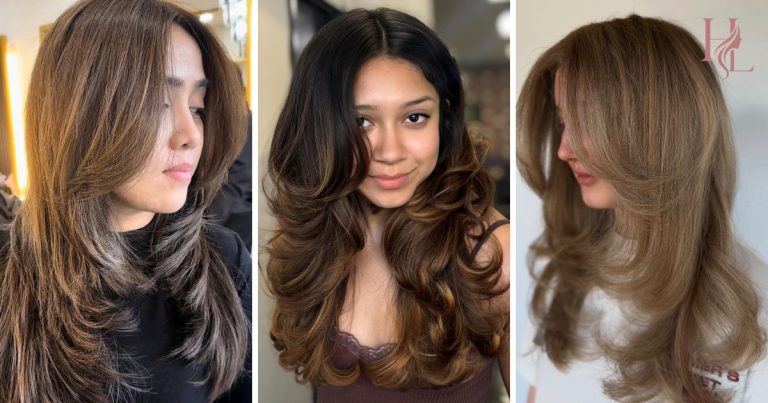
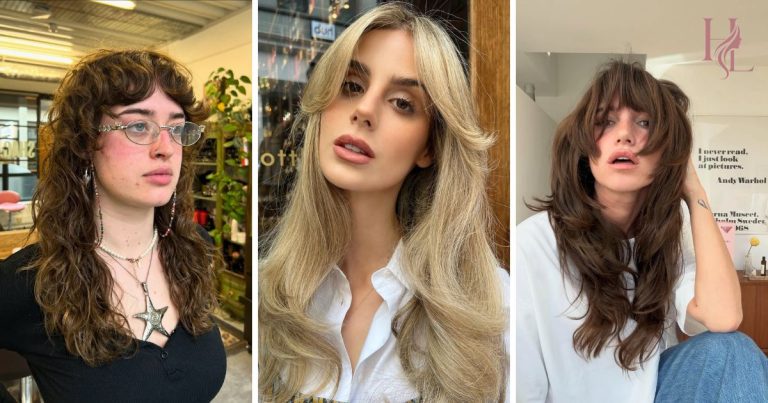
College Girls: 15 Long Layered Haircuts With Side Bangs

Long hair can feel heavy, flat, or hard to style when every strand falls at the same length. Layers solve that problem by removing extra weight and adding natural movement. Add side bangs, and the whole haircut gains a softer, more polished shape.
The best part? Long layered haircuts with side bangs work with straight, wavy, and curly hair. You can choose subtle layers for an easy update or bold, choppy pieces for a dramatic change.
Side bangs also offer plenty of styling freedom. Sweep them across your forehead, tuck them behind one ear, or blend them into your face-framing pieces. They can look neat for work, relaxed for weekends, and voluminous for special events.
Ready for a salon refresh? These 15 ideas cover classic layers, butterfly cuts, shags, wolf cuts, blowout styles, and options for different hair textures.
25 Best Long Layered Haircuts With Side Bangs
Table of Contents
From soft and elegant to textured and playful, these hairstyles offer something for every mood. Use the ideas below to choose your preferred layer length, bang shape, texture, and styling routine.
1. Classic Long Layers With Side-Swept Bangs
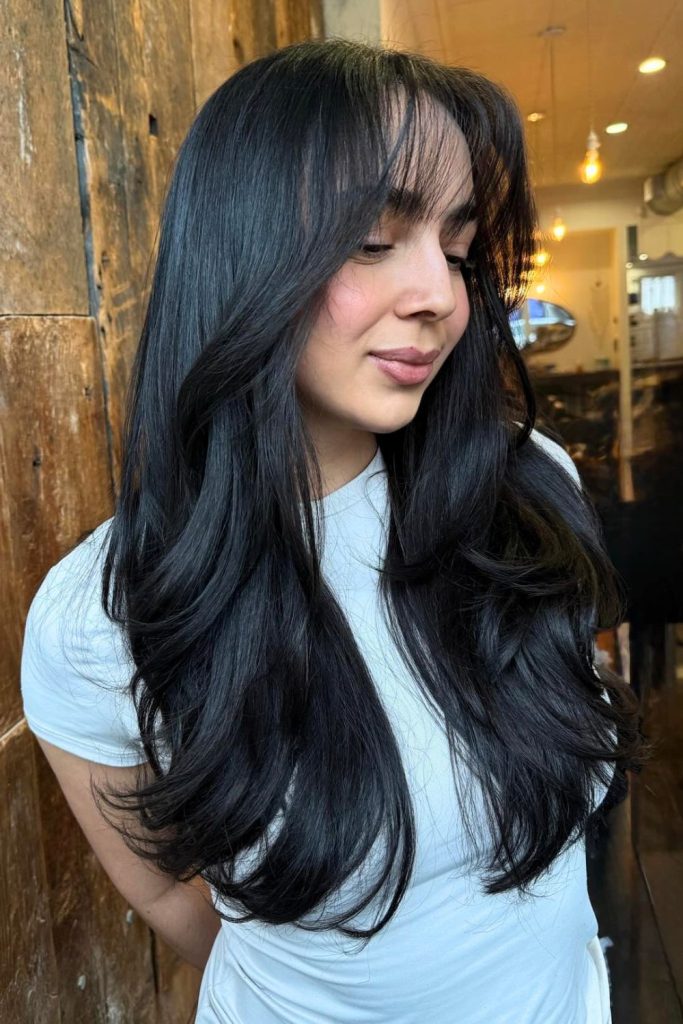
Classic long layers create movement without taking away too much length. The layers usually begin below the chin and continue toward the ends. This placement keeps the hair full without making it look heavy.
Side-swept bangs complete the polished shape. Ask for bangs that start near the brow and grow longer toward the cheekbone. You can brush them across your forehead or tuck them behind one ear.
This timeless haircut works especially well with a smooth blowout. Use a large round brush to curve the bangs away from your face and add a soft bend through the ends.
2. Soft Face-Framing Layers With Wispy Side Bangs
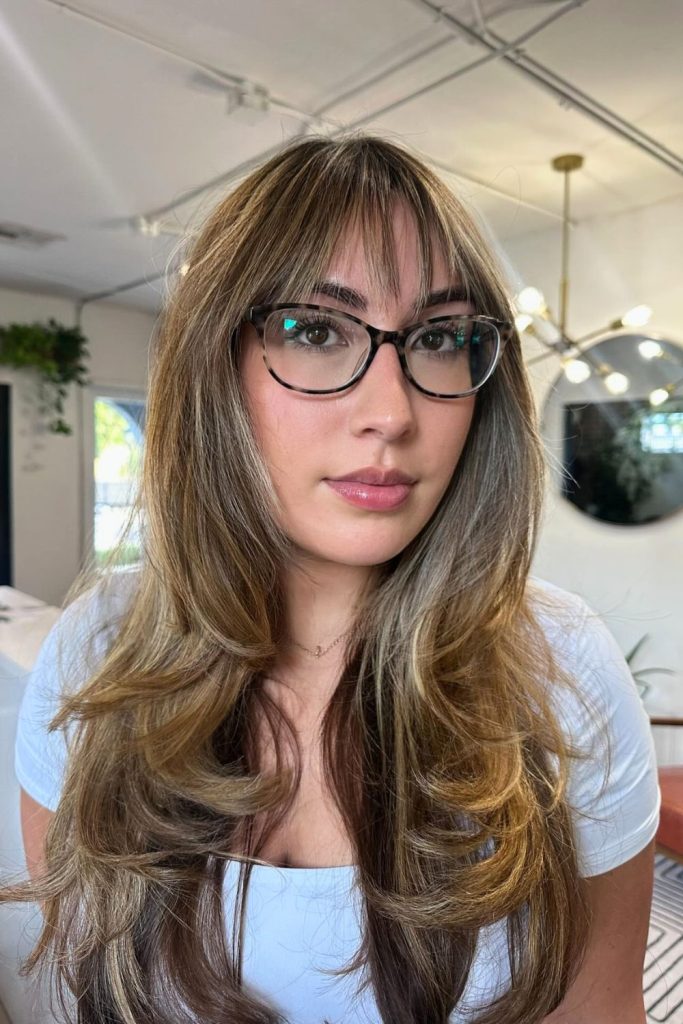
Do you want a gentle change instead of a major cut? Soft face-framing layers may be your answer. The shorter pieces sit around the cheekbones and jaw before blending into the longer hair.
Wispy side bangs keep the front light and airy. They do not create a thick or heavy line across the forehead.
- Best texture: Straight, slightly wavy, or fine hair
- Styling mood: Soft and relaxed
- Maintenance level: Low to moderate
- Finishing touch: A small amount of lightweight hair oil
The result feels effortless but still looks thoughtfully styled.
3. Deep Side Part With Long Swoop Bangs

A deep side part gives long hair instant drama. It shifts more volume to one side, creating a bold swoop across the forehead.
Long bangs work best for this style because they blend easily into the front layers. Ask your stylist to cut the fringe near the cheekbone or jaw. This length gives you room to flip, sweep, curl, or pin the bangs.
For extra lift, dry the fringe in the opposite direction of your final part. Then flip it back once the roots cool. This simple trick helps the swoop hold its shape longer.
4. Side-Part Curtain Bangs With Butterfly Layers

Curtain bangs usually open in the center, but a side part gives them a fresh twist. One side becomes shorter and fuller, while the other creates a long, flowing sweep.
Butterfly layers make the combination even more noticeable. Shorter layers lift the crown and frame the face, while the bottom section keeps its length.
| Haircut feature | What it adds |
|---|---|
| Side-part curtain bangs | Soft movement around the forehead |
| Butterfly layers | Volume near the crown |
| Long lower layers | Length and flowing movement |
| Curved blowout | A light, bouncy finish |
This cut looks beautiful when each layer bends away from the face.
5. Choppy Long Layers With Textured Side Bangs

Choppy layers create visible separation and a more relaxed finish. Instead of blending into one smooth line, each section adds its own movement.
Pair those layers with textured side bangs for an edgy but wearable look. A stylist can lightly point-cut the fringe to prevent it from appearing too blunt.
Apply a small amount of texture spray from the middle lengths to the ends. Then twist a few pieces with your fingers. Avoid coating the roots with heavy products. The goal is flexible texture, not stiff hair.
6. Long Shag With Side-Swept Fringe
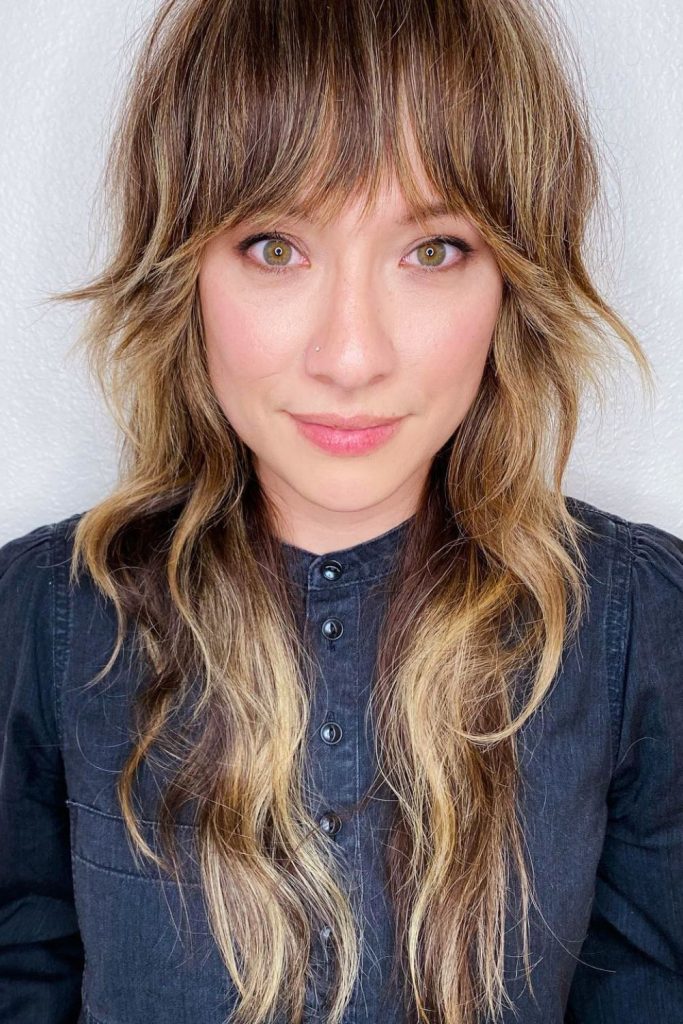
A long shag brings together crown volume, shorter face-framing pieces, and uneven layers through the ends. It has a carefree shape that looks even better with natural movement.
A side-swept fringe makes the shag feel softer around the front. Choose a longer bang for easy styling and enough length to tuck.
- Let natural waves create the texture.
- Add mousse near the roots for lift.
- Scrunch the ends while they dry.
- Keep the finish slightly undone.
This style suits anyone who wants volume without creating a perfectly polished blowout every morning.
7. Soft Wolf Cut With Long Side Bangs
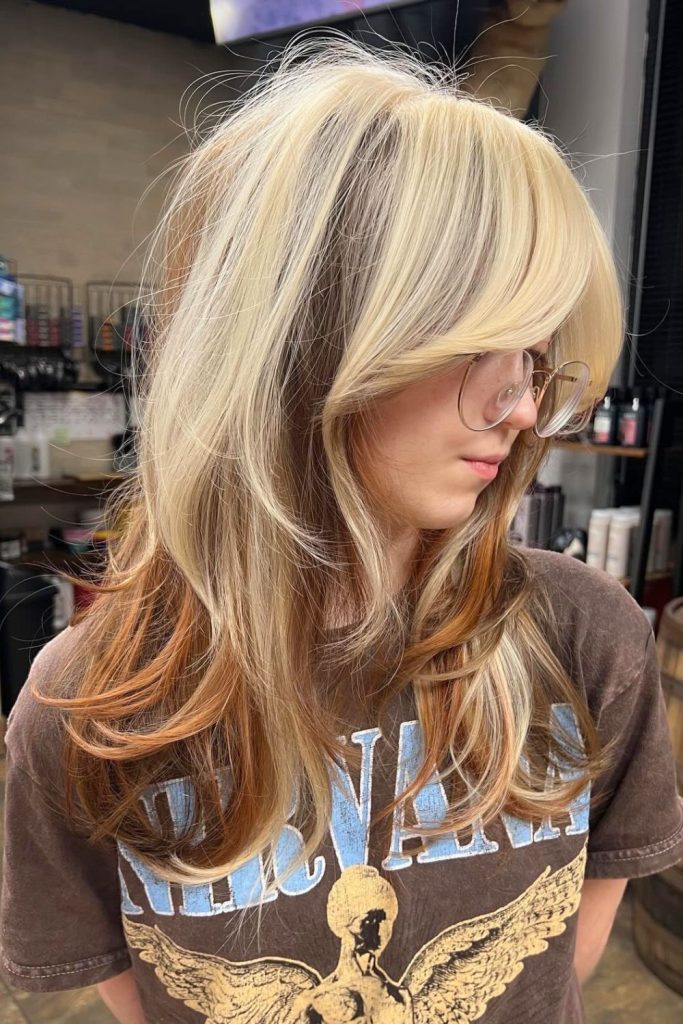
The soft wolf cut combines the crown shape of a shag with the flowing length of a layered haircut. It offers noticeable texture without creating a sharp difference between the top and bottom sections.
Long side bangs make the cut easier to wear. They connect the shorter crown pieces to the layers around the shoulders.
Ask for a blended texture rather than heavily disconnected layers for a softer result. Style it with loose waves, or let your natural bends define the shape. A dry texture spray can add definition between washes.
8. Feathered ’70s Layers With Swoop Bangs
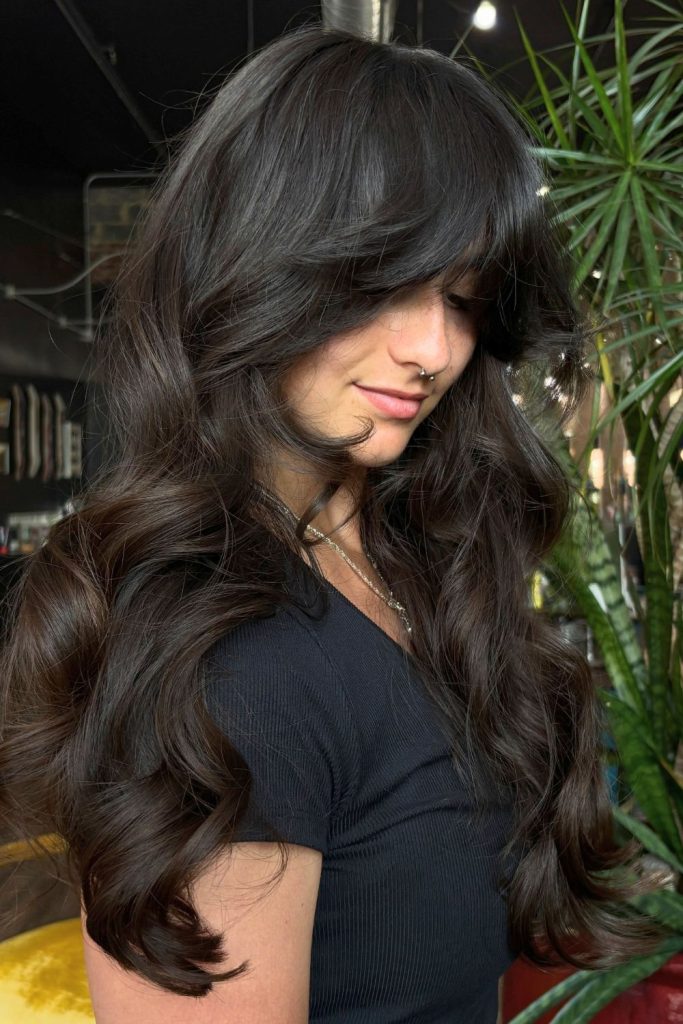
Feathered layers give long hair a light, winged shape. The front pieces curve away from the face, while the lower layers create soft movement through the ends.
Swoop bangs fit this retro-inspired look perfectly. Use a round brush to lift the roots and direct the fringe to one side. Roll the front layers away from the face to create a matching feathered effect.
Styling shortcut: Place large rollers around the crown and front sections after blow-drying. Allow the hair to cool before removing it. The cooled shape holds better and creates longer-lasting volume.
9. 90s Blowout Layers With Side Bangs
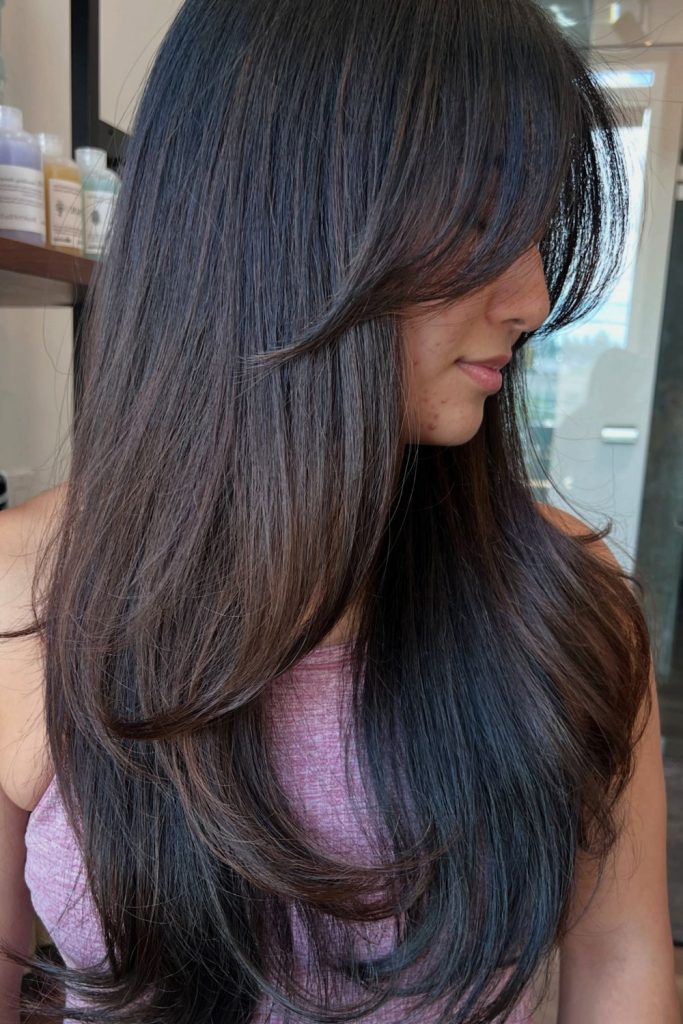
A ’90s blowout is all about smooth roots, lifted layers, and full ends. Long layers give the hair enough movement to create that rounded, bouncy finish.
Side bangs add a sweeping front section that flows into the cheekbone layers. The transition should look seamless rather than separated.
Apply heat protectant before styling. Use a large round brush or wide heated rollers to shape the hair. Once it cools, gently loosen the curls with your fingers. Finish with flexible hairspray so the layers keep their bounce without feeling stiff.
10. Short Crown Layers With Long Side Bangs
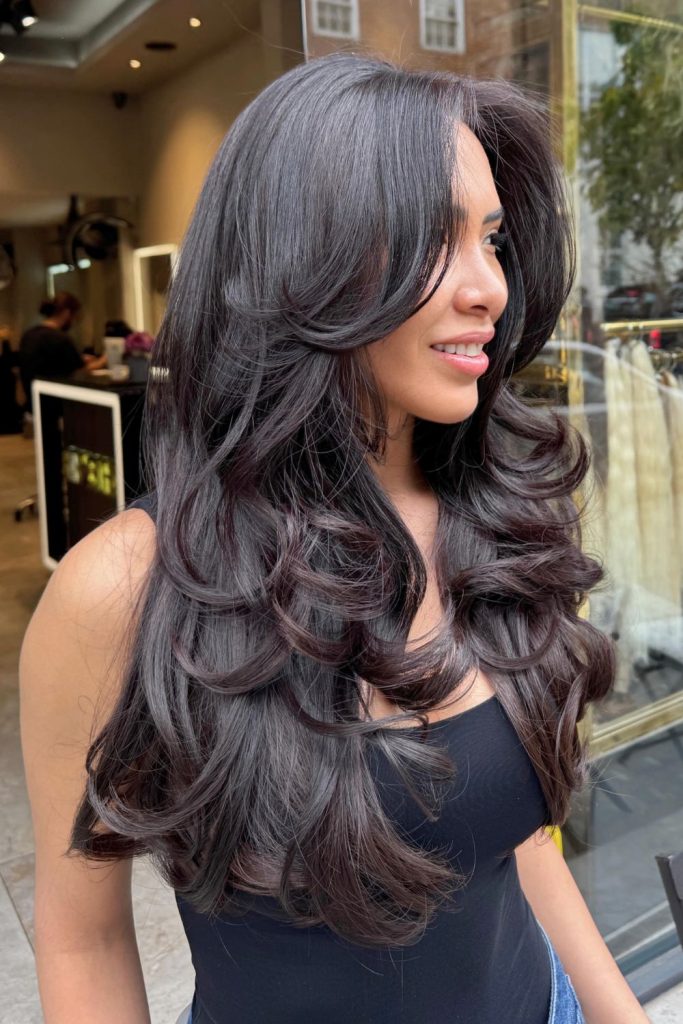
Short crown layers can give flat, long hair a visible lift. These pieces create height near the top while longer layers maintain fullness toward the bottom.
Long side bangs connect the crown to the rest of the haircut. They also provide a soft front section that you can curl or tuck away.
This cut works best when the crown layers remain long enough to lie smoothly. Very short pieces may require more daily styling. Ask your stylist to consider your natural growth pattern before choosing the first layer.
11. V-Cut Long Layers With Side Bangs
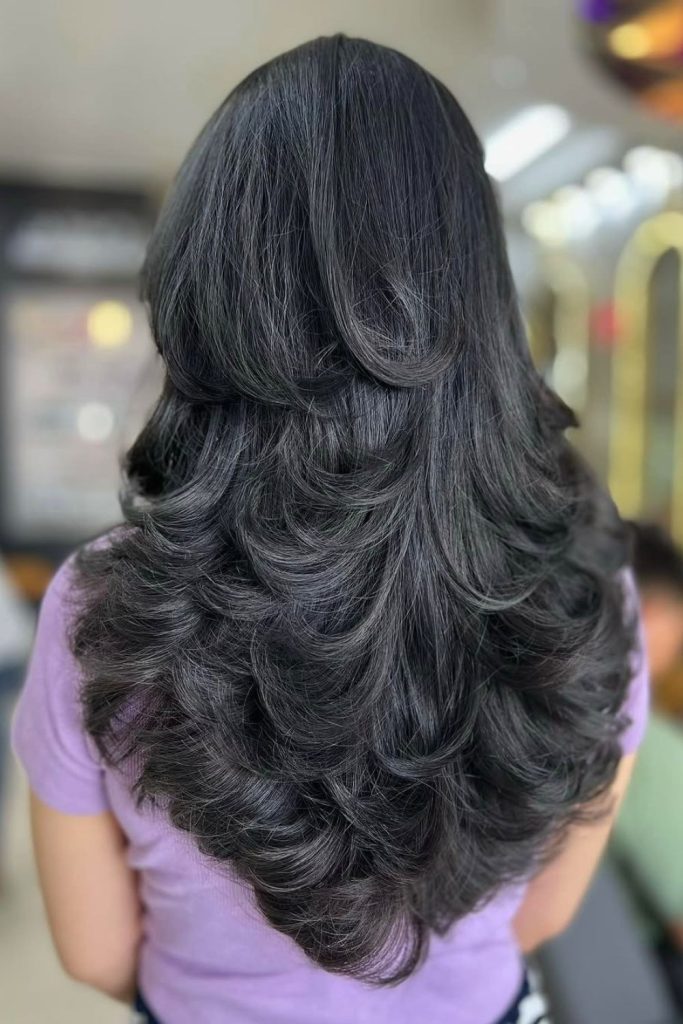
A V-cut creates a pointed shape when viewed from behind. The center stays longest, while the sides become gradually shorter.
Long layers support that shape and create movement without removing the dramatic back length. Side bangs balance the front by adding a shorter, sweeping detail.
Why choose it? The V shape makes very long hair look more structured.
How should you style it? Smooth waves clearly show the layered outline.
What should you request? Ask for a soft V rather than a narrow point if you prefer fuller-looking ends.
12. Wavy Long Layers With Side-Swept Bangs

Waves and long layers work like a natural team. The layers prevent the waves from stacking into a single, heavy shape, while the bends make each length more visible.
Side-swept bangs bring movement toward the face. Keep the bangs longer if your hair tends to shrink after drying.
Apply curl cream or mousse to damp hair. Scrunch upward, then air-dry or use a diffuser on a gentle setting. Refresh the fringe with a small round brush when needed. A slightly imperfect finish often makes this style look more natural.
13. Curly Long Layers With Soft Side Fringe
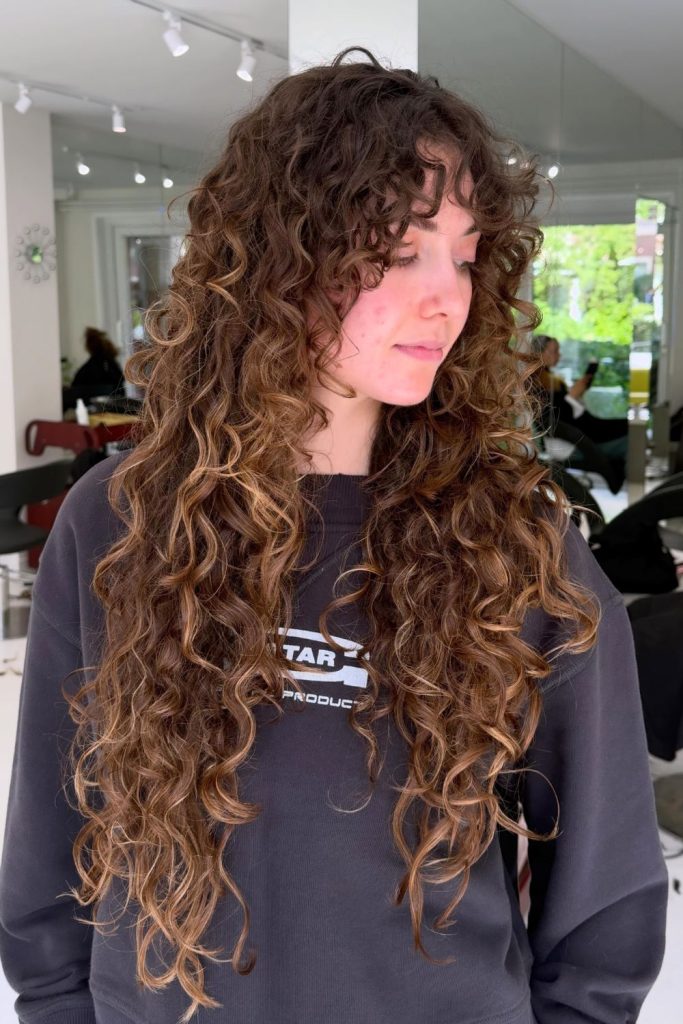
Long curly hair can gain shape and bounce from carefully placed layers. The cut should support the curl pattern rather than create random short pieces.
A soft side fringe adds interest around the front. Your stylist should cut it with curl shrinkage in mind. Bangs that appear long while wet may rise significantly once dry.
- Request curl-by-curl shaping when available.
- Bring reference photos with a similar curl pattern.
- Discuss your usual part before cutting.
- Ask how the fringe will sit without heat styling.
A layered curly cut should feel balanced in its natural state, not only after a salon finish.
14. Thick Hair With Blended Long Layers and Side Bangs
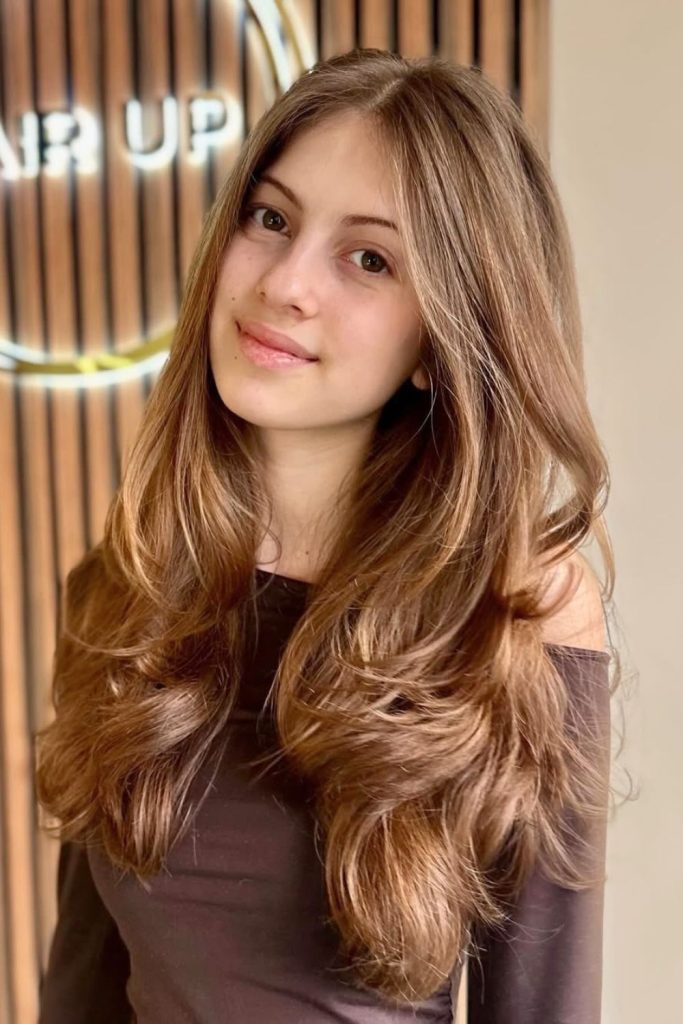
Long layers help thick hair move more freely. They remove some internal weight while keeping the outer length smooth and full.
Blended layers work especially well because they prevent the haircut from developing a bulky or stepped shape. Side bangs add another soft point of movement around the front.
Ask your stylist about internal weight removal, but explain how much fullness you want to keep. The goal is not to thin every section. It is to create a shape that feels comfortable, flows naturally, and remains easy to manage.
15. Brunette Long Layers With Side Bangs

Brunette hair can show impressive depth when layers catch the light at different angles. A smooth finish highlights shine, while waves reveal subtle changes in tone.
Side bangs create another surface for that dimension. A warm brown gloss, soft caramel ribbons, or natural-looking highlights can bring attention to the front layers.
- For a rich finish: Try a deep chocolate tone.
- For soft warmth: Add caramel around the face.
- For subtle contrast: Choose fine, blended highlights.
- For easy upkeep: Keep the roots close to your natural shade.
The haircut still works beautifully with one solid brunette color.
How to Choose the Right Long Layered Haircut
A beautiful reference photo helps, but it does not tell the full story. Consider how the haircut will behave after you wash and style it at home.
Use this quick guide before your appointment:
| Your priority | Layer choice | Side-bang choice |
|---|---|---|
| Keep the maximum length | Subtle lower layers | Long jaw-length bangs |
| Add crown volume | Butterfly or crown layers | Full swoop bangs |
| Support natural waves | Blended medium layers | Textured side fringe |
| Shape thick hair | Long internal layers | Tapered side bangs |
| Protect fine ends | Minimal airy layers | Light wispy bangs |
| Get a bold change | Shag, wolf, or choppy layers | Thick side fringe |
Bring two or three photos to your stylist. Show what you like about each one. You might love the bangs in one photo but prefer the layer placement in another.
Also, mention your normal routine. Do you air-dry your hair, use a round brush, or wear ponytails often? A good haircut should reflect how you actually live.
Easy Ways to Style Long Layers and Side Bangs
You do not need a complicated routine to make long layers look defined. Start with products that suit your texture and use heat only when it adds a clear benefit.
For a Smooth Everyday Blowout
Apply heat protectant and divide your hair into manageable sections. Dry the roots first. Then use a round brush to curve the layers away from your face.
Style the bangs last. Direct them forward at first, then sweep them to the side. This method gives the roots lift while keeping the ends controlled.
For Soft, Loose Waves
Wrap sections around a curling iron or wand while leaving the ends slightly straighter. Change the curl direction for a relaxed effect.
Curl the front layers away from your face. Brush through the finished waves once they’ve cooled. The result should look flowing and touchable rather than tightly curled.
For a Quick No-Heat Refresh
Mist the lengths lightly with water or leave-in conditioner. Twist the front sections away from your face and secure them while they dry.
You can also place the bangs in a large roller for a few minutes. This gives the fringe a soft bend without restyling every section.
How to Maintain Long Layered Haircuts With Side Bangs
Side bangs usually need attention sooner than the long layers. A small trim can stop the fringe from covering your eyes or losing its shape.
Follow a simple maintenance plan:
- Trim side bangs every 4 to 8 weeks.
- Refresh the main layers every eight to twelve weeks.
- Use heat protectant before hot tools.
- Apply conditioner mainly to the middle lengths and ends.
- Use a weekly hair mask if the ends feel dry.
- Sleep with a loose braid or soft scrunchie to reduce tangles.
Your schedule may vary based on your hair texture, growth rate, and chosen bang length. Longer side bangs usually offer more time between trims.
FAQs
Yes. Side bangs connect naturally with face-framing layers, creating movement around the front. They also offer more styling flexibility than many shorter bang styles. You can sweep them across your forehead, blend them into waves, pin them back, or tuck them behind your ear.
The layers usually require moderate or low maintenance. The bangs may need more frequent trims and quick styling after washing. Choosing a longer, cheekbone- or jaw-length fringe can reduce upkeep because it grows into the surrounding layers more smoothly.
Ask for long layers with a side-swept fringe, then explain where you want the shortest layer and bang to finish. Show reference photos and discuss your natural texture, normal part, usual styling method, and preferred maintenance level. Clear details help your stylist adapt the haircut to you.
Final Thoughts
Long layered haircuts with side bangs offer movement, shape, and plenty of styling freedom. You can keep the change subtle with wispy bangs and gentle layers, or choose a shag, butterfly cut, or bold side fringe for more impact.
Save a few ideas that match your texture and routine. Then show your stylist the exact details you like. The right cut should look beautiful while also feeling manageable on an ordinary morning.
Victoria writes practical haircut guides for HairLushly, focusing on long, medium, and short haircuts. Her content helps readers compare real-life haircut options, understand maintenance levels, and choose styles that fit their hair type, lifestyle, and daily routine.